





Editorial Note
Minority-Owned Business Spotlight is a New To Education series highlighting businesses with publicly documented minority, immigrant, veteran, women, Indigenous, or historically underrepresented ownership and founder stories.
This article is intended for educational and informational purposes only. Inclusion does not constitute an endorsement, sponsorship, paid promotion, formal minority-business certification claim, or recommendation of any company, product, or service. Business information may change, so readers should consult the company’s official website for current details.
Some businesses begin with an elaborate strategy, a large investment, and a team of experienced executives.
ALOHA Collection began with two friends, a practical problem, and approximately $4,000.
Native Hawaiian entrepreneurs Heather Aiu and Rachael Leinaʻala Soares founded the travel and lifestyle company in 2014. Their initial idea was to create a lightweight bag that could hold wet swimsuits, sweaty workout clothes, toiletries, and other items travelers wanted to keep separate from the rest of their belongings.
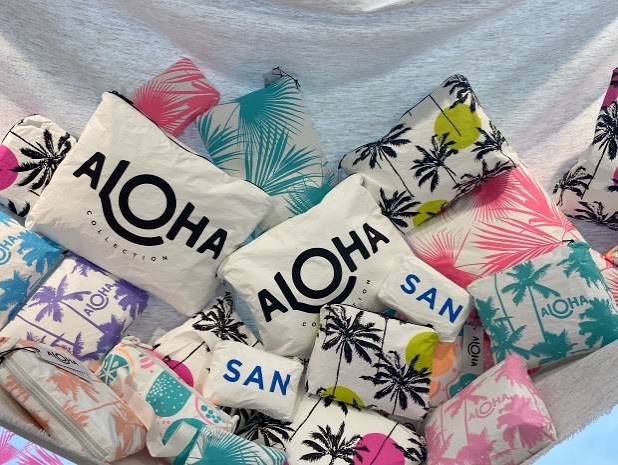
That single product became the foundation of a company now known for Splash-Proof pouches, totes, duffel bags, backpacks, and travel accessories.
Although the brand maintains deep ties to Hawaiʻi, its growth has also become closely connected to Southern California. ALOHA Collection has developed a retail presence in California while building a broader identity around travel, friendship, environmental stewardship, and Hawaiian values.
A Friendship That Became a Business Partnership
Aiu and Soares met after becoming roommates through Craigslist.
At the time, their professional backgrounds were different. Soares worked as an international flight attendant and regularly encountered the challenges of packing for frequent travel. Aiu had studied international business and worked in finance.
Their skills proved complementary.
Soares brought travel experience, product ideas, and an understanding of what active customers needed. Aiu contributed financial knowledge, business planning, and an interest in building a company.
The idea for ALOHA Collection reportedly developed from the everyday problem of carrying wet bikinis and sweaty yoga clothing without soaking or dirtying everything else inside a bag.
Rather than creating a heavy waterproof container, they developed a lightweight pouch designed to resist splashes, spills, and moisture.
The product addressed a simple problem customers could immediately understand.
That clarity gave the founders an advantage. They did not need a complicated explanation to communicate why the product might be useful. Beachgoers, travelers, parents, gym customers, and commuters could quickly imagine how they might use it.
Starting With $4,000 and a Kickstarter Campaign
The founders began ALOHA Collection by contributing approximately $2,000 each.
Their combined $4,000 investment was modest compared with the amount often required to manufacture products, develop packaging, create a website, purchase inventory, and attend trade shows.
To generate additional support and test customer interest, the founders launched a Kickstarter campaign. The campaign raised more than $6,000 and gave them enough momentum to continue developing the business.
Crowdfunding served several purposes.
It provided early capital, but it also allowed Aiu and Soares to measure whether customers understood the product and were willing to pay for it. Backers became some of the company’s first customers and advocates.
The founders then drove to a trade show in Las Vegas, where they introduced their product to potential retailers and industry contacts.
That step helped move ALOHA Collection from a small project between friends toward a wholesale and retail business.
The company’s early development offers an important entrepreneurship lesson: founders do not always need to begin with a complete product line. One useful product, supported by a clear customer problem, can create the foundation for later growth.
A Product Designed Around Movement
ALOHA Collection’s products are designed for people moving between different parts of their lives.
A customer might carry a pouch from the beach to a hotel, from a workout class to the office, or from a family trip back home. The bags are lightweight and intended to help separate damp, sandy, or spill-prone items from other belongings.
The company uses the term “Splash-Proof” rather than waterproof. That distinction is important because it gives customers a clearer understanding of how the products are intended to perform.
Strong businesses set realistic expectations instead of relying on exaggerated promises.
The original pouch eventually led to a wider collection of totes, duffel bags, backpacks, crossbody bags, cosmetic cases, and organizational accessories.
However, the company’s identity remains connected to the same original problem: helping customers carry the unpredictable parts of travel and everyday life more easily.
Bringing Hawaiʻi to Southern California
ALOHA Collection developed across both Hawaiʻi and California.
The founders’ Native Hawaiian background and connection to island life influence the company’s colors, patterns, collaborations, language, and overall identity. At the same time, Southern California offered a natural market for the products.
California’s beach communities, travel culture, fitness industry, and outdoor lifestyle aligned closely with the brand’s intended customer.
The company established operations and stores in California, including locations in San Diego and Orange County. Its presence in areas such as Encinitas and Newport Beach helped introduce the brand to customers whose lifestyles shared similarities with those found in Hawaiʻi.
This expansion demonstrates the value of entering markets that already understand the product’s purpose.
ALOHA Collection did not have to persuade Southern California customers that beaches, travel, exercise, and outdoor activity were relevant. It needed to demonstrate why its products were useful within those activities.
For entrepreneurs, choosing the right market can be as important as developing the right product.
Using Hawaiian Identity With Responsibility
The word “aloha” is recognized around the world, but its cultural meaning extends beyond a casual greeting or tourism slogan.
It can communicate love, compassion, kindness, connection, and a way of relating to other people. For Native Hawaiian founders, using the word as a business name carries both opportunity and responsibility.
ALOHA Collection has connected its branding to the founders’ identities and relationships with Hawaiʻi rather than using Hawaiian imagery as an outside marketing theme.
The company has also collaborated with Hawaiian artists and organizations, incorporating cultural storytelling into product designs and campaigns.
One example is its work connected to Hōkūleʻa, the traditional Polynesian voyaging canoe that helped revive knowledge of non-instrument navigation and strengthen pride in Pacific voyaging traditions.
Cultural collaborations require care. A business should understand the history behind the symbols it uses, involve people connected to the culture, and avoid treating Indigenous identity as decoration.
ALOHA Collection’s Native Hawaiian leadership gives the company a direct cultural relationship with the values and imagery it presents.
From Giving Back to Building a Foundation
Environmental and community support have become significant parts of ALOHA Collection’s identity.
The company developed a giving program centered on mālama ʻāina, a Hawaiian principle commonly associated with caring for and protecting the land.
It later launched the Hōkūpaʻa Foundation, a nonprofit organization intended to support Hawaiʻi-based groups working in environmental stewardship, cultural preservation, education, and community well-being.
According to the company, charitable support is now directed through the foundation.
This evolution shows how a business can make its community commitments more structured as it grows.
A small startup may begin by contributing to individual events or organizations. As revenue and visibility increase, the company may establish clearer goals, application processes, partnerships, and reporting systems.
Formalizing giving can also improve accountability. Customers and community members can better understand where support is directed and what types of work the company considers consistent with its values.
Growing Without Losing the Original Story
As companies grow, their origin stories can become disconnected from their current operations.
A small business built by two friends may eventually employ a larger team, operate several stores, develop many products, and serve customers around the world. The company must decide which parts of its original identity should remain central.
ALOHA Collection continues to present Aiu and Soares’ friendship as an important part of the brand.
Its official story emphasizes their experience as roommates, their initial $4,000 investment, the first pouch, and the Kickstarter campaign that helped them begin.
This narrative works because it relates directly to the company’s current products and personality. Travel, friendship, risk-taking, and adaptability remain part of the brand rather than existing only as historical facts.
The founders have also developed a documentary-style series called “Bag Ladies,” which follows their business journey and offers audiences a closer view of the people behind the company.
Founder storytelling can strengthen customer loyalty when it remains honest and connected to the actual business.
What Entrepreneurs Can Learn From ALOHA Collection
ALOHA Collection demonstrates the value of solving one clear problem well.
The founders did not begin with dozens of products. They developed a lightweight bag for wet and messy belongings, tested interest through crowdfunding, and used customer response to guide expansion.
The company also shows why complementary partnerships can be effective. Aiu and Soares brought different professional experiences, allowing one founder’s strengths to support areas where the other had less experience.
Another lesson is the importance of geographic fit.
The brand’s movement from Hawaiʻi into Southern California made sense because both markets contain customers familiar with beach, fitness, travel, and outdoor lifestyles.
ALOHA Collection also demonstrates how cultural identity can shape a company without becoming superficial branding. Its Native Hawaiian founders connect the business to values such as aloha and mālama ʻāina through products, collaborations, giving, and storytelling.
Finally, the company shows that a limited starting budget does not prevent meaningful growth. However, a small budget requires founders to test ideas carefully, communicate clearly, and invest in products customers can understand.
Key Takeaways
ALOHA Collection is a Native Hawaiian-founded travel and lifestyle company established in 2014 by Heather Aiu and Rachael Leinaʻala Soares.
The founders began with approximately $4,000 and used a Kickstarter campaign to help launch their first Splash-Proof pouch. The product addressed a practical problem involving wet swimsuits, workout clothing, spills, and travel organization.
The company later expanded into a broader range of bags and accessories while developing retail operations in Hawaiʻi and California.
Its growth demonstrates the importance of beginning with a clear customer need, testing demand, choosing markets that fit the product, and building a recognizable brand story.
ALOHA Collection also connects its commercial activity to Hawaiian cultural values, environmental stewardship, and community giving through the Hōkūpaʻa Foundation.
Frequently Asked Questions
Who founded ALOHA Collection?
ALOHA Collection was founded by Heather Aiu and Rachael Leinaʻala Soares, two Native Hawaiian entrepreneurs who met after becoming roommates.
Is ALOHA Collection a Native Hawaiian-owned business?
Public founder profiles identify both Aiu and Soares as Native Hawaiian. The company is therefore accurately described as Native Hawaiian-founded and women-founded.
When was ALOHA Collection founded?
The company was founded in 2014.
Is ALOHA Collection based in California or Hawaiʻi?
ALOHA Collection has strong connections to both. The business was inspired by the founders’ Hawaiian backgrounds and has developed operations and retail locations in Hawaiʻi and Southern California.
What does ALOHA Collection sell?
The company sells Splash-Proof pouches, totes, duffel bags, backpacks, crossbody bags, cosmetic bags, diaper bags, and other travel and organizational accessories.
Are ALOHA Collection bags waterproof?
The company describes its products as Splash-Proof rather than completely waterproof. Customers should review the official care and product information before exposing a bag to significant amounts of water.
What is the Hōkūpaʻa Foundation?
The Hōkūpaʻa Foundation is a nonprofit organization launched by ALOHA Collection to support Hawaiʻi-based work involving environmental stewardship, Hawaiian cultural practices, education, and community well-being.
Final Thoughts
ALOHA Collection began with a problem many travelers recognize: what to do with wet, sandy, sweaty, or spill-prone belongings.
Heather Aiu and Rachael Leinaʻala Soares transformed that everyday frustration into a company that now operates across Hawaiʻi, California, and a much wider consumer market.
Their story shows that entrepreneurship does not always begin with a revolutionary invention. It can begin with improving an ordinary object and presenting the solution in a way customers immediately understand.
The company’s development also highlights the responsibility that comes with culturally rooted branding.
ALOHA Collection’s strongest identity does not come from tropical imagery alone. It comes from Native Hawaiian founders who connect their products and company values to their own backgrounds, communities, and commitment to Hawaiʻi.
That combination of practical design, cultural authenticity, friendship, and purpose helped turn one small pouch into a recognizable lifestyle brand.
Related Articles
Minority-Owned Business Spotlight: Wahpepah’s Kitchen Reclaims Native Foodways in Oakland
Support New To Education
New To Education publishes educational resources, business spotlights, news coverage, and practical information for students, educators, families, professionals, and entrepreneurs.
Readers who value our work can support New To Education through the donation area below. Each contribution helps us continue publishing accessible content, expanding our platform, supporting educators and creators, and connecting education with business and opportunity.
Sources
ALOHA Collection — About the Founders and Company History
ALOHA Collection — Five Years of ALOHA
Shopify — These Native Hawaiian Founders Started a Global Business With Just $4,000
Entrepreneur — Roommates Started a Side Hustle With $4,000
Modern Luxury — ALOHA Collection Brings Hawaiian Spirit to Southern California
ALOHA Collection — Hōkūpaʻa Foundation




