





Editorial Note
Minority-Owned Business Spotlight is a recurring New To Education series highlighting businesses with publicly reported minority, immigrant, veteran, women, or historically underrepresented founder stories. This article is intended for educational and informational purposes only. Inclusion in this series does not constitute an endorsement, sponsorship, paid promotion, certification claim, or recommendation of any company, product, or service. Business details may change over time, so readers should consult official company sources for the most current information.
Chinese food has a long history in the United States, but it has not always been treated with the respect it deserves.
For generations, many American diners were taught to think of Chinese food as quick, cheap, casual, and familiar. Takeout boxes, large portions, and low prices became part of the stereotype. While those restaurants are important and have their own cultural history, that limited view often ignored the depth, regional variety, technique, and creativity within Chinese cuisine.
Yingtao, a contemporary Chinese restaurant in New York City, is part of a newer movement challenging that old assumption.
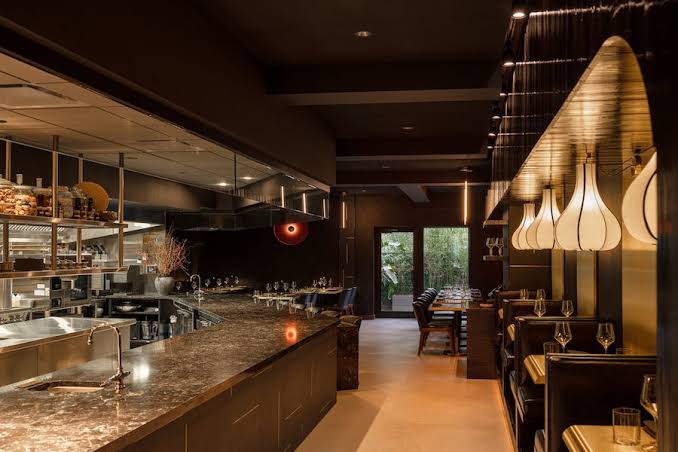
Founded by husband-and-wife team Bolun and Linette Yao, Yingtao presents Chinese flavors through a modern fine-dining tasting menu. The restaurant opened in Hell’s Kitchen in December 2023 and later earned Michelin recognition, placing it in a small but growing group of Chinese restaurants pushing into the fine-dining conversation in the United States.
For a Minority-Owned Business Spotlight, Yingtao is a strong story because it is not only about food. It is about representation, heritage, business risk, cultural value, and the courage to ask diners to see Chinese cuisine differently.
The Story Behind Yingtao
Yingtao is located at 805 9th Avenue in Hell’s Kitchen, New York City. Its official website describes the restaurant as a space for dialogue and collaboration that uses food and beverage to amplify diverse voices and reframe how Chinese cuisine is seen, valued, and experienced at the highest level.
That mission matters.
Fine dining has often been associated with French, Japanese, Italian, and other cuisines that American diners may be more accustomed to seeing at higher price points. Chinese cuisine, despite its complexity and long global influence, has often had to fight against the idea that it should remain inexpensive.
Yingtao challenges that expectation by presenting Chinese flavors with the structure, pacing, presentation, and ambition of a tasting-menu restaurant.
This is not simply about making Chinese food more expensive. It is about making space for Chinese cuisine to be treated as layered, refined, creative, and worthy of serious culinary attention.
A Restaurant Built Around Memory
One of the most meaningful parts of Yingtao’s story is its connection to family memory.
Michelin’s profile of the restaurant notes that owner Bolun Yao’s grandmother serves as both the namesake and culinary inspiration for the restaurant. Other coverage has described Yingtao as drawing from home-cooking memories across places such as Xi’an, Shanghai, Hong Kong, and beyond.
That family connection gives the restaurant emotional weight.
Food is never only about ingredients. It is also about memory. A dish can remind someone of childhood, migration, grandparents, holidays, home, loss, comfort, and identity. For many immigrant and minority-owned businesses, food becomes one of the clearest ways to preserve culture while also adapting to a new environment.
Yingtao’s story shows how personal memory can become a business concept.
That is powerful because it reminds readers that entrepreneurship does not always begin with a market gap. Sometimes it begins with love, grief, memory, and the desire to share something meaningful with others.
Contemporary Chinese, Not Fusion
One of the most important distinctions Yingtao makes is that it describes itself as contemporary Chinese rather than fusion.
In a 2026 partnership announcement with Lee Kum Kee, Bolun Yao explained that Yingtao is a contemporary Chinese restaurant, not fusion. He described contemporary as pushing boundaries while remaining rooted in Chinese culinary traditions.
That distinction matters because “fusion” can sometimes be used too casually. It may suggest that a cuisine becomes more exciting only when mixed with something else. Yingtao’s framing is different. The restaurant is not trying to escape Chinese cuisine. It is trying to expand how people experience it.
That is a useful lesson for cultural entrepreneurship.
Modernizing tradition does not have to mean abandoning tradition. It can mean asking new questions, using new techniques, changing presentation, and creating new experiences while still respecting the roots of the food.
Yingtao’s approach is not about making Chinese cuisine less Chinese. It is about showing how much range Chinese cuisine already has.
Why Michelin Recognition Matters
Michelin recognition can change how a restaurant is perceived.
The Michelin Guide currently lists Yingtao as a one-star restaurant, describing one star as “high quality cooking.” Michelin’s restaurant profile calls Yingtao a stylish Hell’s Kitchen restaurant that reinterprets Chinese cuisine through the lens of Western fine dining.
That recognition matters because it can help shift public perception.
For a long time, Chinese restaurants in the United States were judged through a different lens than many European or Japanese restaurants. Diners might accept high prices for a French tasting menu, sushi counter, or Italian fine-dining experience, but hesitate when Chinese cuisine is presented with the same level of ambition.
Yingtao’s Michelin recognition helps challenge that double standard.
It does not mean Michelin is the only measure of value. Many incredible restaurants never receive stars. Many family-run immigrant restaurants shape communities without formal awards. But in the fine-dining world, Michelin attention can influence media coverage, customer expectations, and industry respect.
For Yingtao, that recognition helps support a larger argument: Chinese cuisine belongs at every level of dining, including the highest one.
The Business Risk Behind the Concept
Opening a fine-dining restaurant is already risky. Opening a contemporary Chinese fine-dining restaurant as first-time restaurateurs adds another layer of risk.
OpenTable reported that Bolun and Linette Yao self-funded Yingtao as first-time restaurateurs. That detail matters because it shows the courage behind the project. Restaurants are difficult businesses, and fine dining can be especially demanding because expectations are high, costs are significant, staffing is complex, and customer experience must be carefully managed.
There is also the cultural risk.
Yingtao asks diners to reconsider what Chinese food can be in New York City. That means the restaurant is not only competing for reservations. It is competing against stereotypes.
A diner may come in with expectations shaped by takeout, regional assumptions, price bias, or limited exposure to Chinese fine dining. Yingtao has to deliver a meal while also educating the palate.
That is not easy.
But that is exactly what makes the business story interesting.
Representation in Fine Dining
Yingtao’s story is also about representation.
Representation does not only mean who appears in media or who owns a business. It also means whose culture gets treated as sophisticated, valuable, and worthy of serious attention.
When Chinese cuisine is limited to the category of cheap comfort food, something important is lost. The cuisine’s regional diversity, technical depth, historical complexity, and artistic potential are flattened.
Yingtao pushes against that.
The restaurant’s official website says it aims to reframe how Chinese cuisine is seen, valued, and experienced at the highest level. That is a clear cultural mission.
For minority-owned and immigrant-founded businesses, representation can be part of the product itself. A restaurant can become a place where a culture is not explained apologetically, but presented with confidence.
That matters for customers, employees, young entrepreneurs, and future chefs who want to see their heritage taken seriously.
Food as Education
Yingtao also fits New To Education because food can be a form of education.
A meal can teach history, geography, language, migration, family structure, agriculture, technique, and identity. It can introduce diners to ingredients they may not know, regional flavors they have never experienced, or cultural traditions they have never studied.
A restaurant like Yingtao can educate without feeling like a classroom.
The tasting-menu format gives the restaurant a way to guide diners through a story. Each course can become a lesson in flavor, memory, technique, or interpretation. That is part of what makes fine dining powerful when it is done well. It can slow people down enough to notice what they are experiencing.
For students and families, Yingtao’s story can also open a conversation about how culture and business intersect. Food is not only something people consume. It is also something people build careers around, preserve through family knowledge, and use to challenge assumptions.
Lessons for Minority Entrepreneurs
Yingtao offers several lessons for minority entrepreneurs.
The first lesson is to know the value of your culture. Minority-owned businesses are often pressured to make their products more familiar, cheaper, or easier for mainstream audiences to understand. Yingtao’s story shows another option: present the culture with confidence and ask the audience to rise to it.
The second lesson is to tell a personal story. The connection to Bolun Yao’s grandmother gives Yingtao emotional depth. People connect with businesses when they understand the story behind them.
The third lesson is to challenge the market carefully. Yingtao is not rejecting fine dining. It is entering fine dining and changing what belongs inside it. That is a smart business move because it works within an existing structure while expanding the conversation.
The fourth lesson is to understand that representation can be part of strategy. For some businesses, cultural identity is not a side note. It is the center of the brand.
Lessons for Students and Families
Students can learn a lot from Yingtao’s story.
The restaurant shows that entrepreneurship can come from culture, memory, and identity. It also shows that success often requires challenging assumptions. If people expect Chinese food to be cheap, a restaurant like Yingtao has to prove that Chinese fine dining deserves attention, respect, and investment.
That is a powerful business lesson.
Students interested in food, hospitality, marketing, design, business, culture, or entrepreneurship can study Yingtao as an example of how a concept becomes a brand. The restaurant has to think about menu design, customer experience, storytelling, service, pricing, sourcing, press, partnerships, and reputation.
Families can also use this story to talk about cultural pride. Many children of immigrant families grow up seeing parts of their culture misunderstood or undervalued. Businesses like Yingtao show that heritage can become a strength, not something to hide.
Why This Story Matters for New To Education Readers
This story matters because New To Education focuses on learning, opportunity, and the real-world value of culture.
Yingtao is more than a restaurant. It is an example of how minority entrepreneurs can challenge old assumptions and create something that honors heritage while moving it forward. It shows that Chinese cuisine does not need to fit into one narrow category. It can be casual, regional, comforting, experimental, elegant, traditional, modern, affordable, luxurious, and everything in between.
That range matters.
For readers, Yingtao’s story is a reminder that business can become a platform for cultural education. It can change what people value. It can open doors for future entrepreneurs. It can help a community see itself represented in spaces where it was once overlooked.
A restaurant cannot solve every issue of representation, but it can shift the conversation one meal at a time.
Yingtao is doing that by asking a simple but powerful question: what happens when Chinese cuisine is treated with the same seriousness, creativity, and respect as any other fine-dining tradition?
Key Takeaways
Yingtao is a contemporary Chinese fine-dining restaurant in Hell’s Kitchen, New York City, founded by husband-and-wife team Bolun and Linette Yao.
The restaurant is connected to Bolun Yao’s family memory, especially his grandmother, who serves as both the restaurant’s namesake and inspiration.
Yingtao has earned Michelin recognition and is helping challenge old assumptions that Chinese food in the United States should only be casual, inexpensive, or takeout-focused.
For New To Education readers, Yingtao is a strong Minority-Owned Business Spotlight because it connects entrepreneurship, culture, representation, family memory, hospitality, and the evolving value of Chinese cuisine in American dining.
FAQ
What is Yingtao?
Yingtao is a contemporary Chinese fine-dining restaurant located in Hell’s Kitchen, New York City.
Who founded Yingtao?
Yingtao was founded by husband-and-wife team Bolun and Linette Yao.
Why is Yingtao a good Minority-Owned Business Spotlight?
Yingtao highlights Chinese and Asian American entrepreneurship, cultural representation, fine dining, family memory, and the effort to reframe how Chinese cuisine is valued in the United States.
Is Yingtao a Michelin-starred restaurant?
Yes. The Michelin Guide lists Yingtao as a one-star restaurant.
What makes Yingtao different?
Yingtao presents Chinese flavors through a contemporary tasting-menu format while emphasizing that its food remains rooted in Chinese culinary traditions.
Related Articles
10 Ways New To Education Can Help Your Business Grow
What You Can Do on New To Education
Sources
MICHELIN Guide — YingTao, New York
MICHELIN Guide — Yingtao Brings MICHELIN-Starred Chinese Cuisine to New York
China Daily — Redefining Chinese Cuisine in New York: The Story Behind Yingtao
OpenTable — Yingtao in NYC: Hell’s Kitchen’s MICHELIN-Starred Gem
Eater NY — A New Chinese Fine Dining Spot Opens in Hell’s Kitchen
Lee Kum Kee and Yingtao Partnership Announcement
New To Education — 10 Ways New To Education Can Help Your Business Grow




