





Editorial Note
Minority-Owned Business Spotlight is a New To Education series highlighting businesses with publicly documented minority, immigrant, veteran, women, Indigenous, or historically underrepresented ownership and founder stories.
This article is for educational and informational purposes only. Inclusion does not constitute an endorsement, sponsorship, paid promotion, certification claim, or recommendation of any business, product, or service. Business information may change, so readers should consult the company’s official website for current details.
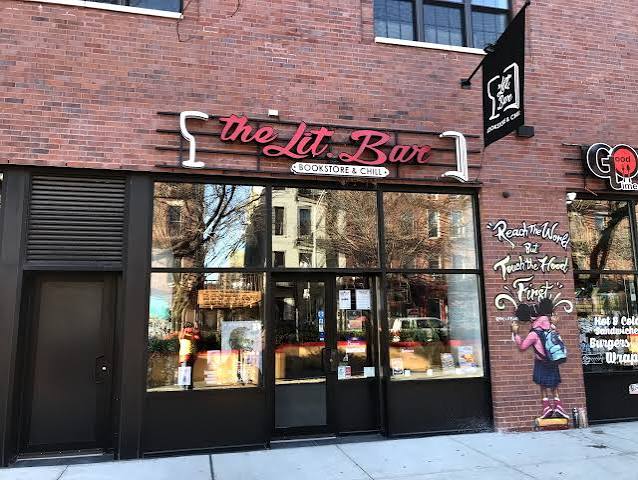
A bookstore can be more than a place to purchase books.
It can become a classroom, gathering space, cultural center, business incubator, and source of pride for a community. In the Bronx, The Lit. Bar has grown into all of those things.
The independent bookstore and wine bar was founded by Bronx native Noëlle Santos, who identifies herself as an African American and Puerto Rican entrepreneur. Santos created The Lit. Bar after recognizing that residents of one of New York City’s largest boroughs lacked sufficient access to bookstores and literary spaces.
The business officially opened in 2019, combining a carefully selected bookstore with a social environment where visitors can attend events, meet authors, enjoy a drink, and connect with other readers.
The Lit. Bar’s story is not simply about opening a retail store. It is about identifying a gap in a community and building a business that responds to it with creativity, personality, and long-term purpose.
A Bronx Without a Bookstore
The idea for The Lit. Bar developed during a period of uncertainty for bookselling in the Bronx.
In 2014, Santos joined thousands of residents protesting the possible displacement of the borough’s Barnes & Noble. The campaign helped extend the store’s lease temporarily, but the location eventually closed in December 2016.
Its closure left the Bronx without a general-interest bookstore.
For Santos, the situation revealed a larger problem. Even when the Barnes & Noble was operating, a single bookstore could not fully serve a borough with approximately 1.4 million residents, numerous schools, colleges, families, and neighborhood communities.
Rather than accepting that gap, Santos began developing her own bookstore concept.
The decision required more than a love of reading. She had to research the publishing industry, study bookselling, understand retail operations, develop a business plan, raise money, find a suitable location, and convince others that an independent bookstore could succeed in the Bronx.
Her effort eventually became The Lit. Bar.
Building a Business Through Community Support
Opening a bookstore requires significant capital. Owners must account for rent, construction, inventory, equipment, staffing, insurance, technology, marketing, and ongoing operating expenses.
Santos turned to crowdfunding as part of her effort to launch the business. The campaign received substantial public support and surpassed its fundraising target, demonstrating that many Bronx residents and supporters wanted the store to exist.
The campaign accomplished more than raising money.
It allowed Santos to test demand before opening, build an audience, attract media attention, and turn future customers into early supporters of the business. Instead of introducing The Lit. Bar only after its doors opened, she built a community around the idea during its development.
That approach offers a useful lesson for entrepreneurs. Crowdfunding can serve as both a financing method and a form of market research. When people contribute to a campaign, share it with friends, or follow its progress, they provide evidence that the concept has emotional and commercial appeal.
The Lit. Bar opened its doors on April 27, 2019, in the Mott Haven neighborhood of the Bronx.
Why The Lit. Bar Is More Than a Bookstore
The Lit. Bar describes itself as an independent bookstore and wine bar.
The combination creates an experience that differs from a traditional retail bookstore. Visitors can browse books, attend discussions, participate in programs, socialize, and enjoy the atmosphere of a neighborhood gathering place.
The store offers general-interest books, gifts, and programming with an emphasis on local interests, diversity, and readers of different ages. Its official materials also describe the business as a space for literary and community gatherings.
This model addresses a challenge facing many independent bookstores.
Online retailers can often compete aggressively on price, inventory, and convenience. A local bookstore may not be able to win by selling books alone. It can, however, provide something an online marketplace cannot easily reproduce: personal recommendations, cultural programming, physical community, local knowledge, and a memorable environment.
The Lit. Bar sells books, but it also gives people a reason to visit, stay, return, and bring others with them.
That experience is an important part of the company’s value.
Representation on the Shelves and Behind the Counter
Representation is central to The Lit. Bar’s identity.
Santos has described herself as an African American and Puerto Rican entrepreneur from the Bronx. Her background influences the store’s personality, mission, programming, and connection to the surrounding community.
For readers from historically underrepresented communities, seeing books by Black, Latino, local, and diverse authors can affect how welcoming a bookstore feels. It communicates that their experiences, neighborhoods, families, and histories belong within literature.
Representation also matters at the ownership level.
When customers enter a Black- and Latina-owned bookstore in the Bronx, they see an entrepreneur from the community controlling the business, curating its inventory, shaping its events, employing staff, and deciding how the space will serve local residents.
That visibility can be especially meaningful for students and aspiring business owners.
The business demonstrates that careers connected to literature do not have to be limited to writing or teaching. Publishing, bookselling, event planning, marketing, retail management, community engagement, hospitality, and entrepreneurship all operate within the literary economy.
Turning a Local Need Into a Business Opportunity
The Lit. Bar began with a clear problem: the Bronx was underserved by bookstores.
However, identifying a problem does not automatically create a sustainable company. An entrepreneur must determine whether people will pay for the proposed solution and whether the organization can generate enough revenue to continue operating.
Santos developed a model that combined several complementary elements.
Books attract readers, students, educators, parents, authors, and gift buyers. Events create reasons for people to return. The wine-bar concept gives adult customers another way to engage with the space. Gift items and special editions create additional purchasing opportunities beyond standard book sales.
The store also promotes bulk ordering for customers seeking at least 25 copies of a title. That service can appeal to schools, businesses, book clubs, nonprofit organizations, and event organizers.
Together, these offerings reduce the business’s dependence on a single type of customer or transaction.
The model shows how entrepreneurs can create multiple revenue opportunities without losing the company’s central identity. Every part of The Lit. Bar still connects to books, culture, conversation, and community.
A Business With a Distinct Voice
One reason The Lit. Bar stands out is that it does not sound like a generic bookstore.
Its website, promotional language, events, and social presence reflect Santos’ personality and her connection to the Bronx. The company uses humor, cultural references, local pride, and informal language to communicate with its audience.
That voice makes the brand easier to recognize.
Many businesses attempt to appear professional by removing nearly all personality from their communication. The result may be polished, but it can also feel interchangeable with dozens of competitors.
The Lit. Bar takes a different approach. Its branding communicates that the business belongs to a specific place, founder, and community.
That authenticity cannot be manufactured simply by copying slang or visual trends. It works because the company’s voice is connected to the founder’s lived experience and the purpose of the business.
For entrepreneurs, the lesson is not to imitate The Lit. Bar’s style. The lesson is to develop a voice that genuinely fits the company, customers, and community being served.
What Entrepreneurs Can Learn From The Lit. Bar
The Lit. Bar shows how a community problem can become the foundation of a meaningful business.
Santos did not begin by asking what product might be easy to sell. She recognized that Bronx residents needed greater access to books, literary programming, and welcoming cultural spaces. She then designed a business around that need.
The company also demonstrates the value of building public support before opening. Through organizing, crowdfunding, media outreach, and community engagement, Santos created momentum around the business while it was still being developed.
Another lesson is the importance of differentiation.
The Lit. Bar does not compete with large online retailers only by placing books on shelves. It offers events, personal curation, local representation, social experiences, gifts, wine, and a physical connection to the Bronx.
Finally, the business shows that culture and profitability do not have to be treated as opposing goals. A company can serve a meaningful social purpose while still operating as a business that must attract customers, manage costs, develop revenue, and build a recognizable brand.
Key Takeaways
The Lit. Bar is an independent bookstore and wine bar in the Bronx founded by Noëlle Santos, an African American and Puerto Rican entrepreneur and lifelong Bronx resident.
Santos developed the idea after participating in efforts to preserve bookstore access in the borough and recognizing that Bronx readers remained significantly underserved.
The business officially opened in April 2019 and has since operated as a bookstore, literary destination, event space, and community gathering place.
Its development demonstrates how entrepreneurs can use community engagement, crowdfunding, cultural authenticity, and a differentiated customer experience to build a business around a local need.
The Lit. Bar also provides students with a broader view of the literary economy by showing how books connect with retail, hospitality, marketing, events, education, and entrepreneurship.
Frequently Asked Questions
Who owns The Lit. Bar?
The Lit. Bar was founded and is operated by Bronx entrepreneur Noëlle Santos. She describes herself as African American and Puerto Rican.
When did The Lit. Bar open?
The Lit. Bar officially opened on April 27, 2019.
Where is The Lit. Bar located?
The bookstore is located at 131 Alexander Avenue in the Bronx, New York. Visitors should check the official website for current opening hours before traveling.
What does The Lit. Bar sell?
The business sells books and gift items while also operating a wine bar. It hosts literary and community experiences and offers bulk book ordering.
Why is The Lit. Bar important to the Bronx?
The business helped restore access to an independent general-interest bookstore in a borough that had lost its remaining major bookstore. It also provides a community space that emphasizes reading, diversity, local culture, and literary programming.
Final Thoughts
The Lit. Bar is a strong example of entrepreneurship rooted in place.
Noëlle Santos recognized that the Bronx deserved more than occasional access to books. It deserved a permanent literary destination shaped by someone who understood the community and believed in its readers.
Building that destination required organizing, research, fundraising, branding, persistence, and the willingness to enter a difficult retail industry.
The result is a business that sells books while also creating space for conversation, culture, education, and connection.
For aspiring entrepreneurs, The Lit. Bar offers an important reminder: some of the strongest business ideas begin by paying close attention to what a community is missing.
Related Articles
Minority-Owned Business Spotlight: African American Expressions
Minority-Owned Business Spotlight: Partake Foods Makes Allergy-Friendly Snacks More Inclusive
Support New To Education
New To Education publishes educational resources, business spotlights, news coverage, and practical information for students, educators, families, professionals, and entrepreneurs.
Readers who value our work can support New To Education through the donation area below. Each contribution helps us continue publishing accessible content, expanding our platform, supporting educators and creators, and connecting education with business and opportunity.
Sources
The Lit. Bar — Official Website and Founder Story
The Lit. Bar — Careers and Company Background
The Lit. Bar — Visitor Information and Location




