
Landing in Japan for the first time can make transportation feel more complicated than it really is. You see names like Suica, PASMO, Welcome Suica, and ICOCA everywhere, and it is easy to assume choosing the “wrong” one will ruin your trip.
It will not.
For most travelers, Japan’s major IC cards do the same core job: they let you tap into trains, subways, and many buses, and they also work for small purchases at convenience stores, station kiosks, vending machines, and more. The best card is usually the one that matches where you begin your trip and how long you are staying.
Here is the practical version.
What an IC card actually does
An IC card is Japan’s reloadable transit smart card. Instead of buying a paper ticket for each local ride, you tap in and tap out. The fare is deducted automatically from your balance.
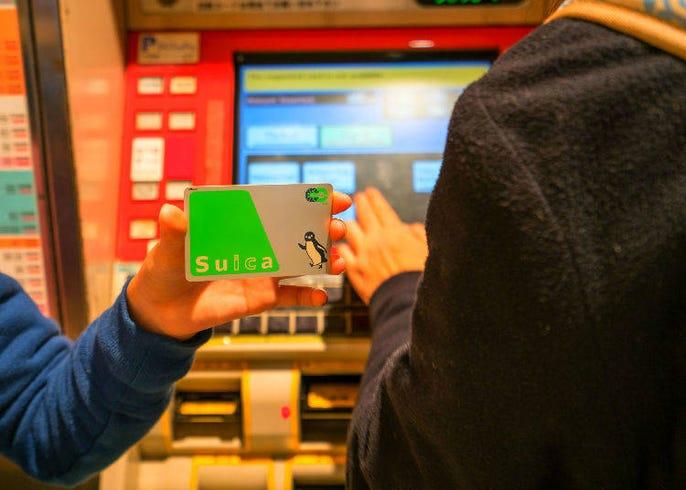
According to JR East, Suica can be used on trains, subways, buses, and monorails, and for shopping as e-money. PASMO and ICOCA work the same way in everyday travel. That means once you have one card set up, city transportation becomes much faster and much less stressful.
This is especially helpful after a long flight, during station transfers, or when traveling with kids, luggage, or a tight schedule.
The easiest choice for most Tokyo visitors: Welcome Suica
If you are flying into Tokyo and staying less than a month, Welcome Suica is often the cleanest option.
JR East says Welcome Suica is meant for temporary visitors, requires no deposit, and is valid for 28 days from the date of purchase. You can use it in the Tokyo area and across the nationwide mutual-use network on many trains, buses, stores, and vending machines.
That makes it ideal for:
- first-time visitors
- short vacations
- family trips
- travelers who do not want to think about refunds later
The tradeoff is simple: because it is built for visitors, it is not your best choice for a longer stay or for anyone who wants a standard reusable card with a refundable deposit structure.
When regular Suica or PASMO makes more sense
If you want a more standard card, Suica and PASMO are both solid choices.
JR East’s official Suica page says a new card includes a 500-yen deposit, and the card can be topped up in cash up to 20,000 yen. PASMO’s official purchase page says the same 500-yen deposit applies to a new physical PASMO card.
In practical travel terms, that means:
- buy the card once
- load money onto it
- use it for local transit and small purchases
- return it later if you want the deposit back, subject to the issuer’s refund rules
PASMO is especially useful if you prefer the Tokyo private railway and subway ecosystem, while Suica feels more closely associated with JR East. For most visitors, though, the difference is minor. If the machine in front of you sells one and not the other, just buy the available one and move on.
That is usually the smartest decision.
What about ICOCA?
If your trip starts in Osaka, Kyoto, Kobe, Hiroshima, or wider JR West territory, ICOCA is the natural Kansai-region equivalent.
JR West’s official purchase page says a standard ICOCA costs 2,000 yen total, including a 500-yen deposit. Like Suica and PASMO, it is built for tap-and-go local travel and shopping.
One useful current detail: JR West’s official ICOCA site continues to post 2026 network and service updates, including expansion notices in western Japan. That is a reminder that regional coverage changes over time, especially for buses and secondary lines. If you are heading beyond the big-city core, it is worth checking the operator page for your exact area.
Should you use your phone instead?
If you use a compatible iPhone or Apple Watch, PASMO has a strong official phone-based option. PASMO’s Apple Pay page says you can create a PASMO in Wallet, use it across Japan on many trains and buses, and top it up digitally, with stored value up to 20,000 yen.
That can be a great choice for travelers who want:
- fewer physical cards in their wallet
- easy top-ups
- one less thing to lose
Still, a physical card can be simpler for families, shared trip logistics, or travelers who prefer not to rely on battery life and device settings.
The biggest misunderstanding: IC cards are not magic all-Japan tickets
This is where travelers get tripped up.
Official operator pages note that these cards are broadly interoperable, but they cannot be used for continuous travel across certain separate usage areas. In other words, a card that works beautifully for city transit may not carry you seamlessly through every long intercity journey.
Also, if you ride a limited express, Green Car, or certain reserved-seat services, you usually need an extra ticket or surcharge even if you tap in with your IC card.
So if your trip includes Tokyo to Kyoto, airport limited express trains, resort trains, or rural rail segments, do not assume your IC card alone covers everything. Think of it as your local travel wallet, not your complete rail pass.
The simplest rule for choosing
Use this shortcut:
- Starting in Tokyo for a short trip: get Welcome Suica
- Starting in Tokyo and want a standard reusable card: get Suica or PASMO
- Starting in Kansai or JR West areas: get ICOCA
- Prefer using your iPhone or Apple Watch: consider PASMO on Apple Pay
If two options are equally convenient, do not over-optimize. The best IC card is usually the one you can get quickly and start using immediately.
Final advice
Japan’s transit system rewards calm, simple decisions. You do not need the perfect card. You need a working card, enough balance for the day, and a basic understanding of where IC cards stop being enough.
Once that part is handled, Japan becomes much easier to enjoy. You spend less time staring at fare maps and more time catching trains, finding lunch, and actually experiencing the trip you came for.
Practical Tips or Checklist
- Buy your IC card from the operator in the region where you start your trip.
- For trips under 28 days in Tokyo, check whether Welcome Suica or TOURIST PASMO fits your plan.
- Keep enough balance loaded before airport runs or late-night arrivals.
- Use cash top-ups for physical cards unless the operator page clearly supports your device/payment method.
- Do not assume your IC card covers shinkansen, limited express supplements, or every rural line.
- Before long regional trips, verify your route on the relevant operator’s official site.
- If you want a refund on a deposit-based card, check the issuer’s refund location and handling-fee rules in advance.
Sources
- JR East, “What’s a Suica?”: https://www.jreast.co.jp/en/multi/suica/
- JR East, “Suica”: https://www.jreast.co.jp/en/multi/pass/suica.html
- JR East, “Welcome Suica”: https://www.jreast.co.jp/en/multi/welcomesuica/welcomesuica.html
- PASMO, “What is PASMO?”: https://www.pasmo.co.jp/visitors/en/
- PASMO, “Purchasing a PASMO Card”: https://www.pasmo.co.jp/visitors/en/issue/
- PASMO, “Use PASMO with Apple Pay”: https://www.pasmo.co.jp/mp/app/en/
- JR West, “ICOCA”: https://www.jr-odekake.net/icoca/
- JR West, “How to Purchase ICOCA / Child ICOCA”: https://www.jr-odekake.net/icoca/purchase/icoca.html
- JNTO, “Transportation in Japan”: https://www.japan.travel/en/plan/getting-around/