




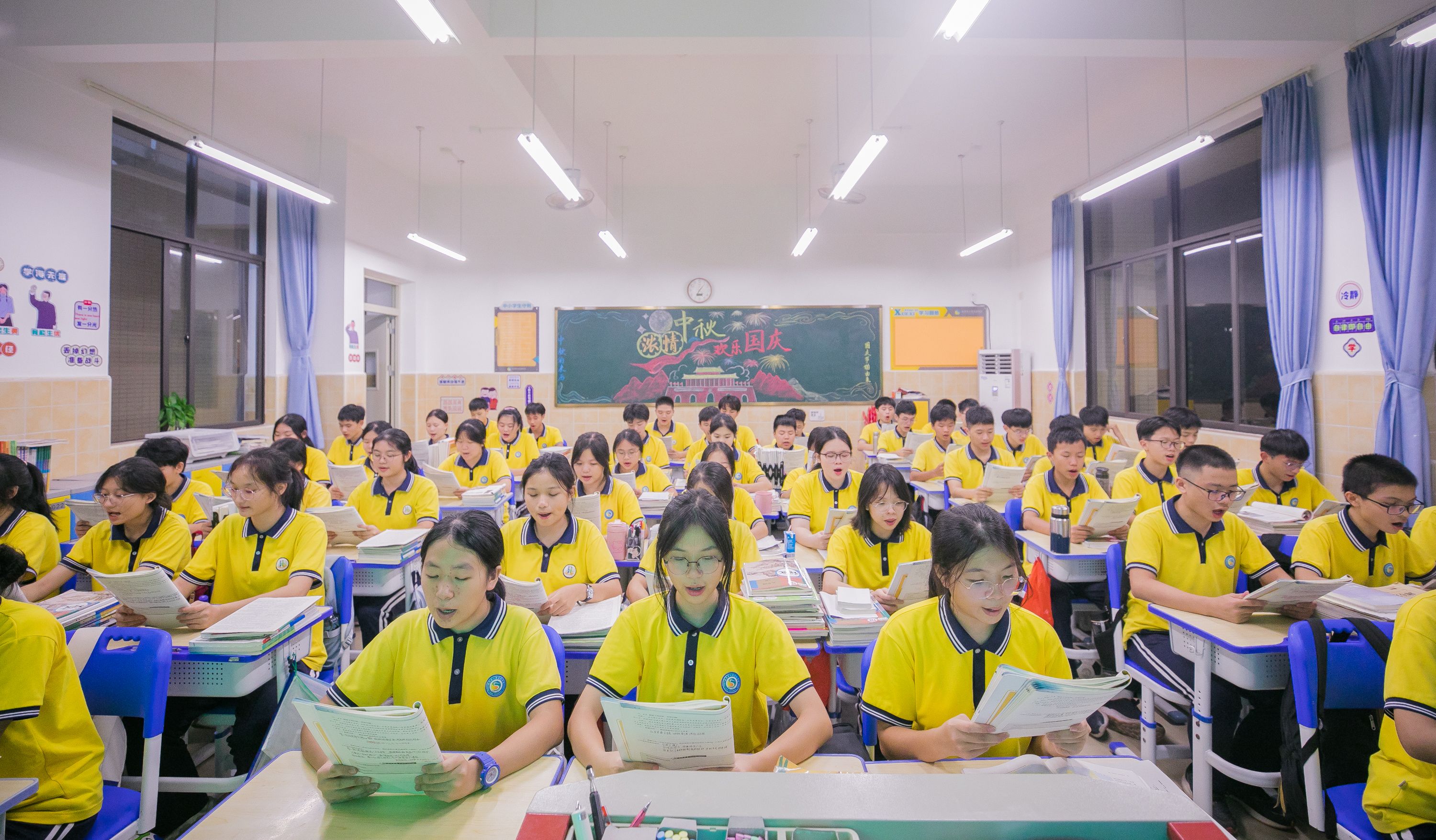

Every June, the gaokao draws global attention as one of the most important exams in China. That attention is understandable. For many students, the test is a major turning point, and the emotional weight around it is real.
But if we want a fuller and more useful picture of education in China in 2026, it helps to look one step beyond the exam hall.
The more practical question now is this: what happens after the gaokao, when students and families have to choose among a much larger and more varied higher-education system than in the past?
That question matters because the scale of Chinese higher education has changed. According to China’s Ministry of Education, the country had about 48.46 million students in higher education in 2024, and the gross enrollment rate reached 60.8%. The ministry’s 2025 national institution list also shows how broad the system has become, with regular universities, undergraduate vocational universities, higher vocational colleges, and adult higher-education institutions all playing visible roles.
Those are verified facts. The interpretation is simpler: in today’s China, admissions season is not only about getting in. It is also about choosing the right path.
A Bigger System Means More Kinds of Decisions
Outside China, discussion of the gaokao often centers on elite campuses and intense competition. That is part of the story, but it is incomplete.
A system with more than 3,000 higher-education institutions naturally creates more educational pathways. Some students are aiming for research-intensive universities in major cities. Others are comparing regional public universities with strong teacher education, engineering, business, or healthcare programs. Still others are looking seriously at applied undergraduate or higher vocational routes that may offer clearer links to employment.
This is one reason the post-exam period matters so much. A score does not automatically answer questions like these:
- Does the student want a research-heavy academic environment or a more applied one?
- Is a major in engineering, education, computing, nursing, or logistics actually a better fit than a more prestigious campus with a weaker program match?
- Is it smarter to prioritize city, cost, and internship access over institutional reputation alone?
- Would a hands-on vocational or applied program produce better near-term opportunities for this student?
These are not secondary questions anymore. In many cases, they are the main decision.
Vocational and Applied Routes Are No Longer Side Notes
One of the clearest signals in the official data is the size of China’s applied and vocational sector.
The Ministry of Education’s 2025 institution list includes 51 undergraduate vocational universities and 1,562 higher vocational institutions. That does not mean all programs are equal, and it does not mean every family values them the same way. But it does show that vocational and applied education is not a marginal corner of the system.
For students, this matters in practical terms. A student who prefers structured, skills-based learning may do better in a program built around applied training, industry partnerships, and technical specialization than in a more general academic environment. Families sometimes frame the decision as status versus compromise. In reality, it can be a choice between two different learning styles and career routes.
That is an interpretation, not a ministry slogan. But it follows from the structure of the system itself.
Why Official Admissions Platforms Matter
Another lesson from the current season is procedural rather than ideological: students need to use official information.
China’s admissions rules are national in framework but often provincial in operation. Timelines, score release practices, subject combinations, and volunteering procedures can vary. That is why official platforms such as CHSI and Sunshine Gaokao remain important reference tools.
For families, this may sound obvious, but it is one of the most practical points in the whole process. In a large system, rumors travel fast. Official platforms are where students can compare institutions, review admissions information, and ground decisions in published guidance instead of social-media noise.
The broader interpretation is that digital transparency tools have become part of modern admissions literacy. Students do not just need test scores; they need the ability to evaluate program information carefully.
Prestige Still Matters, but Fit Matters More Than Many People Admit
It would be unrealistic to pretend prestige does not matter in China. It does. Families, employers, and students all understand the signaling power of well-known institutions.
But the expansion of higher education makes a prestige-only strategy less reliable than it may have looked a generation ago. When a system reaches this scale, the return on a decision often depends on the interaction between major, city, internships, student motivation, and long-term goals.
A strong regional university in a field that matches a student’s strengths may be the better outcome. A vocational route tied to local industry may be the smarter choice for another student. A teacher-training or applied-technology program may suit students who want stable and clearly structured professional routes.
None of this means rankings or brand names are irrelevant. It means they are incomplete.
What Global Readers Often Miss About China’s Education Story
Internationally, China’s education story is sometimes reduced to pressure, competition, and test preparation. Those elements are real, and they should not be dismissed.
But the current admissions season also shows something constructive: China’s system has become broad enough that educational choice is increasingly part of the story too.
That does not magically remove inequality or uncertainty. It does, however, mean that more students are navigating a diversified landscape rather than a single narrow gate. For teachers and counselors, that creates room for better guidance. For parents, it creates a reason to focus on fit and long-term development. For international readers, it is a reminder that modern Chinese education is not only about one exam. It is also about what kind of higher education students are trying to build a life through.
The Bottom Line
As the June 2026 post-gaokao window unfolds, the most useful question is not simply “How hard was the exam?”
It is: What kind of education path makes the most sense after it?
That is where China’s current higher-education story becomes more practical, more nuanced, and more relevant to students and families everywhere.
Call to action: If you follow education in China, look beyond the test-day headlines and watch the admissions choices. They reveal where the system is expanding, what families value, and how student pathways are evolving in real time.
Practical Takeaways
- For students: Compare majors, teaching style, internship access, and city costs before treating prestige as the only decision rule.
- For parents: Ask not only “Can my child get in?” but also “Will this environment help them thrive?”
- For counselors and teachers: Use official admissions platforms early, especially when students are comparing provincial rules or unfamiliar program types.
- For international readers: China’s education story in 2026 is partly about exam pressure, but it is also about system diversification.
- For policymakers and observers: The growth of applied and vocational pathways is one of the most important practical trends to watch.
Sources
- Ministry of Education of the People’s Republic of China, statistics section, including the 2024 National Education Statistical Bulletin: moe.gov.cn/jyb_sjzl
- Ministry of Education of the People’s Republic of China, official site: moe.gov.cn
- Ministry of Education of the People’s Republic of China, 2025 national list of higher-education institutions: moe.gov.cn
- Sunshine Gaokao official admissions platform: gaokao.chsi.com.cn
- China Higher Education Student Information and Career Center (CHSI): chsi.com.cn
- World Bank, School enrollment, tertiary (% gross) - China, drawing on UNESCO UIS data: data.worldbank.org/indicator/SE.TER.ENRR?locations=CN




