
Editorial Note
Veteran-Owned Business Spotlight is a recurring New To Education series highlighting businesses with publicly documented veteran founders, military-service backgrounds, veteran ownership, or veteran-led leadership.
This article is intended for educational and informational purposes only. Inclusion does not constitute an endorsement, sponsorship, paid promotion, veteran-business certification claim, paranormal claim, historical guarantee, safety recommendation, or recommendation of any company, tour, property, product, or service.
Ghost stories are often dismissed as simple entertainment.
Yet behind many of them are real buildings, communities, tragedies, conflicts, crimes, epidemics, family histories, and moments that shaped the cities where people live today.
U.S. Ghost Adventures built a nationwide tourism business around that intersection of history and the unexplained.
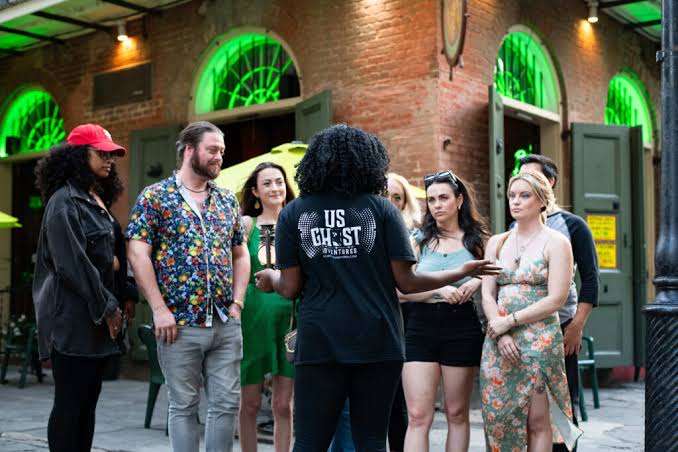
Founded by Marine Corps combat veteran Lance Zaal, the company offers guided ghost tours, haunted pub crawls, group experiences, overnight stays, and other history-centered attractions across the United States. Its tours combine documented local history with folklore, reported paranormal experiences, and stories connected to people who lived and died in each location.
The company’s official website currently advertises experiences in more than 250 cities, along with overnight opportunities at historic properties such as the Lizzie Borden House and other locations associated with well-known American mysteries.
U.S. Ghost Adventures offers an unusual veteran entrepreneurship story. It is not a defense contractor, outdoor-equipment manufacturer, coffee company, or military-themed clothing brand.
Instead, it shows how military leadership, historical curiosity, technology, tourism, local employment, and storytelling can become the foundation of a scalable experience-based business.
A Marine Corps Veteran With an Interest in History
Lance Zaal enlisted in the United States Marine Corps during his final year of high school after the terrorist attacks of September 11, 2001.
He trained as an infantry Marine and later served with the Fleet Antiterrorism Security Team and the First Battalion, Second Marine Regiment. Zaal completed three deployments, including service in Baghdad and Al-Anbar Province in Iraq and a deployment involving Cuba and Chile.
He left the Marine Corps in 2006 at the rank of sergeant. His publicly documented military record includes the Combat Action Ribbon, Navy and Marine Corps Achievement Medal, Iraq Campaign Medal, and other commendations.
Military service exposed Zaal to different cultures, difficult environments, leadership responsibilities, and the consequences of war. It also strengthened his longstanding interest in history and global affairs.
After leaving the Marines, he attended the College of William & Mary, where he studied international relations and economics before earning an MBA.
His transition into entrepreneurship was not immediate or easy.
Zaal worked in defense-related consulting and program management, but he later experienced unemployment and invested his personal savings in an early tourism-technology project.
That project eventually helped create the foundation for U.S. Ghost Adventures.
From a Mobile Tour App to In-Person Experiences
In 2013, Zaal launched ITourMobile, a technology platform intended to turn a smartphone into a personal tour guide.
The concept allowed users to explore cities through location-based stories and information. However, developing a successful tourism platform required more than technology. Travelers also wanted interaction, personality, local insight, and memorable experiences.
According to an Entrepreneur profile, the business began offering physical tours after encountering a requirement that tourism listings include an in-person component. That operational adjustment eventually led the company deeper into guided experiences.
Ghost tours proved especially well suited to this model.
They could combine architecture, local history, dramatic storytelling, walking, nightlife, folklore, and the possibility of encountering something unexplained. They also gave tour guides room to develop a relationship with the audience rather than simply delivering facts.
The transition provides a useful lesson for entrepreneurs.
A business may begin with one product but discover that customers place greater value on a related service. Successful founders must be willing to recognize when the market is pointing toward a different opportunity.
Zaal did not abandon technology or tourism. He changed the way they were delivered.
Why Ghost Tours Work as an Educational Experience
Ghost tours are entertainment, but they can also introduce visitors to historical subjects they might not otherwise explore.
A single walking tour may touch on war, disease, migration, architecture, slavery, crime, religion, labor, political conflict, local legends, and the lives of ordinary residents.
The supernatural element attracts attention, while the historical setting provides depth.
U.S. Ghost Adventures says its stories are developed through historical research, firsthand interviews, guide experiences, guest reports, and local accounts. The company describes its approach as different from performances built around costumes, staged surprises, or actors jumping out to frighten customers.
That distinction matters because the business is selling storytelling rather than a haunted-house attraction.
A strong guide must understand pacing, audience engagement, historical context, safety, humor, and the difference between a verified event and a legend.
The guide may explain that a death, fire, battle, or criminal case is historically documented while also making clear that a reported haunting belongs to local folklore or personal testimony.
This gives customers room to decide what they believe.
Skeptics may enjoy the architecture and history. Paranormal enthusiasts may focus on reported encounters. Travelers may simply want an unusual way to understand a city after dark.
The same tour can serve several audiences at once.
Turning Local Stories Into a Nationwide Business
A ghost tour is naturally local.
The stories of Gettysburg cannot simply be transferred to New Orleans, Salem, Savannah, Charleston, or San Diego. Each city requires its own research, route, characters, historic sites, regulations, and community knowledge.
Scaling such a business is therefore more complicated than copying one script and sending it to every market.
U.S. Ghost Adventures works with local historians, researchers, writers, managers, and tour guides to build experiences around specific places.
Its official company information states that the business employs more than 1,000 local experts and trained guides. Those guides are expected to connect history, community, culture, and storytelling rather than merely memorize a generic script.
This model creates a balance between national branding and local knowledge.
The company can centralize booking systems, marketing, training, customer service, technology, and brand standards. At the same time, the tour itself must feel connected to the city where it takes place.
For entrepreneurs interested in expansion, this is a valuable distinction.
Some parts of a business should be standardized. Others must remain local.
The challenge is deciding which is which.
The Importance of the Tour Guide
In many businesses, the product is something customers can hold.
For U.S. Ghost Adventures, the guide is a major part of the product.
A well-researched route can still disappoint customers if the guide sounds uninterested, rushes through the material, cannot answer basic questions, or fails to manage the group.
A strong guide can make an ordinary street corner feel important by explaining who lived there, what happened nearby, and why the location remains part of local memory.
Tour guiding requires several skills at once.
Guides must speak clearly, hold attention, adjust to different groups, manage time, navigate public spaces, respond to disruptions, understand safety expectations, and present sensitive history respectfully.
They may lead families, couples, school groups, tourists, history enthusiasts, skeptics, and paranormal investigators during the same week.
That makes hiring and training essential.
U.S. Ghost Adventures cannot rely only on the appeal of ghost stories. Its reputation depends on whether local guides deliver a consistent experience across hundreds of markets.
This is a common challenge for service companies.
The customer often experiences the brand through one employee. Training, communication, and workplace culture therefore become part of quality control.
Owning Historic and Allegedly Haunted Properties
The company has expanded beyond walking tours by operating historic properties associated with widely known crimes, deaths, legends, and paranormal reports.
Its portfolio includes the Lizzie Borden House in Fall River, Massachusetts, and other locations where customers may book tours, investigations, or overnight stays.
The Lizzie Borden House is connected to the 1892 axe murders of Andrew and Abby Borden. The case became one of the most famous unsolved murder stories in American history and continues to attract researchers, tourists, and paranormal enthusiasts.
Operating a historic property is different from leading a walking tour.
The company must address maintenance, preservation, staffing, insurance, guest safety, overnight accommodations, local requirements, visitor behavior, and the ethical presentation of real deaths or tragedies.
These properties can create additional revenue through lodging, merchandise, events, investigations, and private bookings. They also deepen the company’s connection to historical tourism.
U.S. Ghost Adventures states that owning and operating such sites allows it to preserve historic properties while inviting visitors to experience them more directly.
The business model shows how a tourism company can move from selling guided experiences to managing destinations.
That expansion can be powerful, but it also introduces greater financial and operational responsibility.
Balancing History, Folklore, and Paranormal Claims
A ghost-tour company must manage a delicate credibility issue.
Customers expect ghost stories, but they may also expect the company to distinguish documented history from speculation.
Paranormal activity cannot be verified in the same way as a building date, military record, court case, newspaper report, or death certificate.
Responsible storytelling should therefore avoid presenting every legend as confirmed fact.
U.S. Ghost Adventures describes its tours as honest accounts built from historical research, eyewitness reports, guide experiences, and stories associated with particular locations.
That approach recognizes that several kinds of information may exist within one tour.
Some details are documented. Others are oral traditions. Some are personal accounts that cannot be independently confirmed.
The educational value comes partly from helping visitors understand those differences.
This is also a broader lesson in media literacy.
People regularly encounter stories that combine facts, interpretations, assumptions, memories, and beliefs. Learning to separate those categories is useful far beyond a ghost tour.
A good historical storyteller can preserve the mystery without misrepresenting the evidence.
Military Leadership in a Civilian Company
Zaal has connected the growth of U.S. Ghost Adventures to leadership lessons developed during his Marine Corps service.
In his Entrepreneur interview, he emphasized that effective leaders need empathy, listening skills, fairness, decisiveness, and the ability to understand the needs of the people they lead.
These qualities matter in a geographically distributed company.
U.S. Ghost Adventures operates experiences across many cities, often through guides and local managers who work far from the company’s central leadership.
A founder cannot personally supervise every tour.
The company therefore depends on systems, training, trust, accountability, and local decision-making.
Military experience can support those responsibilities, but civilian leadership is not identical to leading Marines.
Employees are not service members, and customers are not part of a military mission. A successful veteran entrepreneur must translate military lessons rather than copying military culture directly.
Planning, discipline, responsibility, communication, and adaptability can transfer well. Excessive rigidity or an overly commanding management style may not.
Zaal’s public comments suggest that he views leadership as service rather than authority alone.
That mindset is especially relevant in hospitality, where employee morale directly affects the customer experience.
Creating Employment Through Storytelling
Tourism businesses can generate work for people with backgrounds that do not always fit traditional corporate roles.
Actors, teachers, historians, writers, students, retirees, veterans, performers, museum workers, and people with strong public-speaking skills may all be effective tour guides.
A local guide does not necessarily need an advanced history degree. However, the person must be willing to study, communicate accurately, engage with visitors, and represent the company professionally.
U.S. Ghost Adventures’ expansion has created opportunities for guides, managers, researchers, writers, customer-service employees, marketers, property staff, and technology workers.
This highlights an important economic feature of experience-based businesses.
They can turn local knowledge and communication skills into paid work.
A person who knows a city’s history may not have considered that knowledge commercially valuable. A tour company creates a structure through which that expertise can become a service.
The business also benefits from hiring people who care about the communities in which they work.
A guide with a genuine connection to a city can provide details and emotional context that a visitor would not receive from a generic recording.
Giving Back Beyond the Business
U.S. Ghost Adventures presents social responsibility as part of its company identity.
The official company biography describes Zaal’s involvement in humanitarian work, veteran support, disaster response, and aid efforts connected to Ukraine.
After leaving the Marines, he created or supported nonprofit initiatives involving student veterans, entrepreneurs, and humanitarian needs.
He later founded Ghosts of Liberty, an organization associated with veterans providing equipment, training, financial assistance, and other support in Ukraine.
Entrepreneurship and charitable work should not be confused. A business must generate revenue and remain financially sustainable, while a nonprofit or humanitarian project has a different legal and operational purpose.
However, a successful company can give a founder resources, visibility, and flexibility to support outside causes.
Zaal has publicly argued that entrepreneurs have a responsibility to contribute to something larger than personal wealth.
That belief influences how U.S. Ghost Adventures presents its mission.
The tours are designed as entertainment, but the company also asks customers to think about mortality, legacy, and how they want to be remembered.
That is an unusually reflective message for a tourism company built around ghosts.
What Entrepreneurs Can Learn From U.S. Ghost Adventures
U.S. Ghost Adventures demonstrates that a business can scale an experience without making every location identical.
The company standardized its brand, booking systems, marketing, and operating structure while adapting each tour to local history and culture.
It also shows the importance of listening to the market.
Zaal’s original tourism concept centered heavily on mobile technology. In-person tours became a larger opportunity because customers and platforms placed value on live experiences.
Another lesson is that storytelling can be a commercial skill.
A company does not always need to manufacture a product. It can organize research, people, locations, and narratives into an experience customers are willing to purchase.
U.S. Ghost Adventures also demonstrates the value of serving multiple audiences. Its tours can appeal to history enthusiasts, tourists, paranormal believers, skeptics, families, couples, and people looking for evening entertainment.
Finally, the company shows how veterans can translate military experience into industries that appear completely unrelated to national defense.
Leadership, mission planning, adaptability, accountability, and team development can support tourism just as effectively as they support manufacturing, logistics, construction, or technology.
Key Takeaways
U.S. Ghost Adventures is a veteran-founded tourism and entertainment company created by Marine Corps combat veteran Lance Zaal.
Zaal served as an infantry Marine, completed three deployments, and left the service as a sergeant before earning degrees in international relations, economics, and business.
The company developed from an early mobile-tour platform into a nationwide provider of guided ghost tours, haunted pub crawls, group experiences, historic-property visits, and overnight stays.
Its official website currently promotes tours in more than 250 cities and identifies a workforce of more than 1,000 local experts and trained guides.
The company’s business model combines centralized technology and branding with city-specific historical research, local guides, folklore, and reported paranormal experiences.
U.S. Ghost Adventures demonstrates how veteran leadership, historical storytelling, tourism, technology, and local employment can be combined into a scalable experience-based business.
Frequently Asked Questions
Who founded U.S. Ghost Adventures?
U.S. Ghost Adventures was founded by Lance Zaal, a former United States Marine Corps infantry sergeant and combat veteran.
Is U.S. Ghost Adventures veteran-owned?
The company is publicly identified as veteran-founded and led by Lance Zaal. Readers seeking formal veteran-owned business certification information should confirm that status directly with the company or an appropriate certifying organization.
What does U.S. Ghost Adventures offer?
The company offers walking ghost tours, haunted pub crawls, private and group tours, overnight stays, paranormal-themed experiences, merchandise, and visits to historic properties.
How many cities does the company serve?
The official U.S. Ghost Adventures website currently advertises experiences in more than 250 cities. Tour availability may change, so customers should confirm current locations directly through the company.
Are the ghost stories presented as proven facts?
The company says its tours combine historical research with folklore, eyewitness reports, guide experiences, and accounts of unexplained events. Paranormal claims should not be treated as scientifically established facts.
Does the company own haunted properties?
U.S. Ghost Adventures operates or promotes experiences at several historic properties associated with famous deaths, crimes, legends, or paranormal reports, including the Lizzie Borden House.
Are the tours appropriate for children?
Suitability can vary by city, route, subject matter, tour length, and time of night. Parents should review the specific tour description and age guidance before booking.
Final Thoughts
U.S. Ghost Adventures proves that veteran entrepreneurship does not have to follow a predictable path.
Lance Zaal moved from infantry service and international affairs into technology, tourism, historical research, and ghost storytelling.
The connection may not seem obvious at first.
Yet the business depends on many abilities that military veterans often develop: planning, leadership, adaptability, communication, responsibility, and the ability to operate across different locations with a shared mission.
The company also demonstrates the economic value of history.
Old buildings, local legends, forgotten residents, unsolved crimes, wars, epidemics, and community memories can become the foundation of an experience that attracts visitors and creates employment.
The strongest ghost tour is not simply frightening.
It leaves customers looking at a familiar street, building, or city differently than they did before.
U.S. Ghost Adventures built a nationwide business around that moment of transformation when a place stops feeling ordinary because someone has revealed the stories hidden inside it.
Related Articles
Veteran-Owned Business Spotlight: Fetch! Dog Treats
Support New To Education
New To Education publishes educational resources, veteran-owned business spotlights, news coverage, and practical information for students, educators, families, professionals, and entrepreneurs.
Readers who value our work can support New To Education through the donation area below. Each contribution helps us continue publishing accessible content, expanding our platform, highlighting veteran entrepreneurship, and connecting education with business and opportunity.
Sources
U.S. Ghost Adventures — Official Website
U.S. Ghost Adventures — About the Company and Founder
Lance Zaal — Military Service, Education, and Career History
PR Newswire — U.S. Ghost Adventures Expanded Tours Across Additional Cities and States
PR Newswire — U.S. Ghost Adventures Founder Launches Ghosts of Liberty