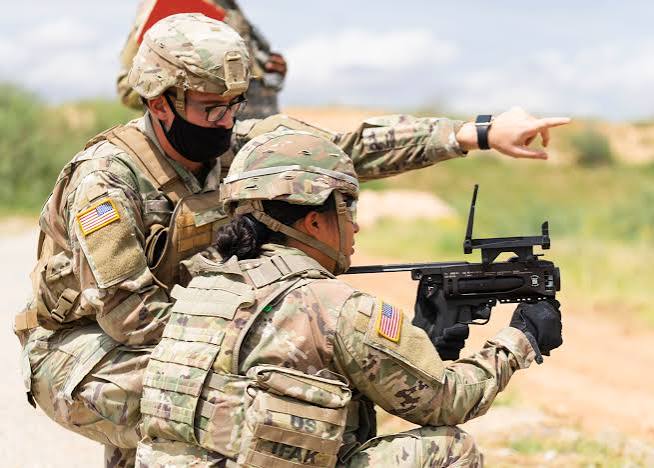
VET TEC 2.0 is accepting applications for short-term technology training in fields such as cybersecurity, software, and IT, with tuition, housing, and books support for eligible veterans and transitioning service members.
The Department of Veterans Affairs has reopened a major pathway for veterans and transitioning service members who want to move into technology careers without committing to another traditional college degree.
The Veteran Employment Through Technology Education Courses 2.0 program, better known as VET TEC 2.0, supports approved short-term, non-degree technology training in areas including computer programming, computer software, data processing, information sciences, and media applications.
Current approved providers are already offering programs in areas such as cybersecurity, full-stack software engineering, technical support, network administration, and AI cloud and DevOps engineering.
Bottom Line: VET TEC 2.0 gives eligible veterans and service members approaching separation another federal route into technology careers, with tuition, housing, and books support. But the redesigned program has tighter eligibility requirements, a 4,000-participant annual payment cap, and unusually strong employment-accountability requirements for training providers.
What We Know
VET TEC 2.0 was established under Section 212 of the Senator Elizabeth Dole 21st Century Veterans Healthcare and Benefits Improvement Act, enacted January 2, 2025.
The law created a new high-technology training program after the original VET TEC pilot ended.
VET TEC 2.0 is not a degree program.
VA says approved programs must provide non-college-degree training in computer programming, computer software, media applications, data processing, or information sciences. Training-provider guidance also states that approved programs generally must run between 6 and 28 weeks.
That structure makes the program particularly relevant to veterans looking for relatively short, job-focused training instead of another multi-year degree.
Who Can Qualify?
VET TEC 2.0 is not open to every veteran or service member.
According to VA, an applicant generally must:
- be a veteran discharged under conditions other than dishonorable, or an active-duty service member within 180 days of separation;
- have at least 36 months of active-duty service; and
- be under age 62 when VA approves the application.
VA’s online application page uses VA Form 22-10297.
One particularly important feature is that applicants do not need to have previously qualified for another VA education benefit in order to participate.
That makes VET TEC 2.0 different from many education programs tied directly to remaining GI Bill entitlement.
The Program Is Limited to 4,000 Paid Participants Per Year
VET TEC 2.0 has a national participation limit.
VA currently limits the program to 4,000 paid participants per fiscal year, although Congress can change that number.
As of August 28, 2026, VA reported 2,428 participant openings still available.
That means meeting the eligibility requirements does not create unlimited access.
VA warns applicants that even after approval, benefits may not be awarded during the same fiscal year if the participation limit has already been reached.
For veterans considering the program, annual availability may therefore matter almost as much as eligibility.
What VET TEC 2.0 Pays For
For the August 1, 2026 through July 31, 2027 rate period, VA pays approved tuition and mandatory fees directly to the training provider.
At public institutions, VA pays net tuition and mandatory fees.
At private institutions, VA currently pays net tuition and mandatory fees up to $30,908.34 for the academic year.
Eligible participants may also receive a monthly housing allowance while training.
For students attending in person, housing payments generally follow the Post-9/11 GI Bill structure tied to the Department of Defense housing rate for an E-5 with dependents in the training location.
VA also provides money for books and supplies.
Active-duty participants are not eligible for the monthly housing allowance.
Online Students Can Receive Housing Support Too
Distance learning can be particularly useful for veterans who do not live near an approved provider.
Several programs on VA’s current provider list are available through distance learning.
For online-only training, VA uses a separate monthly housing rate rather than the location-based in-person rate.
The current VET TEC 2.0 rate page should be checked before enrollment because these benefit amounts can change by academic year.
That flexibility may make VET TEC 2.0 useful for veterans who are working, raising families, living overseas, or unable to relocate for a short-term program.
The Relationship With GI Bill Entitlement Is Unusual
One of the most important features of VET TEC 2.0 involves how participation interacts with other VA education benefits.
If someone has remaining entitlement under the Post-9/11 GI Bill, Montgomery GI Bill Active Duty, or Survivors’ and Dependents’ Educational Assistance, VA generally charges one month of entitlement for every month of full-time VET TEC 2.0 training.
But veterans with no remaining entitlement may still qualify.
VA specifically states that someone can participate even after using the maximum amount of VA education benefits.
Applicants also do not have to have previously qualified for a VA education benefit.
That makes VET TEC 2.0 particularly interesting for veterans who have already used a GI Bill for a bachelor’s or graduate degree and later decide they want to retrain for technology work.
Providers Do Not Receive All Their Tuition Money Up Front
VET TEC 2.0 uses a payment model designed to hold training providers accountable for student outcomes.
According to VA’s training-provider guidance, payments generally occur in three stages:
25% after VA confirms the participant’s first day of attendance;
25% after successful completion of the program;
and the final 50% after the participant reaches a qualifying employment or continued-education outcome.
One common path requires the graduate to obtain employment in the field of study within 180 days after graduation and remain in that job for at least 180 days.
If the training provider itself hires the graduate, the qualifying employment period is generally 365 days.
Continued education in the same field can also satisfy the final payment milestone.
That structure gives training providers a financial reason to focus not only on enrollment and graduation, but on what happens afterward.
Job Placement Is Built Into the Program
VA requires training providers to help graduates move toward employment or further education related to their field of study.
Participants and providers must also report employment or education status after training.
VA’s public program page states that graduates later have to verify that they stayed in qualifying employment for 180 days—or 365 days if hired directly by their training provider.
That makes VET TEC 2.0 meaningfully different from education benefits that primarily measure whether the student enrolled and completed coursework.
The federal government is tying a significant share of provider reimbursement to post-training outcomes.
VA Is Tightening Provider Oversight
In July 2026, VA published additional guidance explaining how the federal 85/15 rule applies to VET TEC 2.0.
The rule is intended to prevent VA education money from supporting programs that depend almost entirely on federally supported students.
VA’s July guidance addresses issues including full-time-equivalency calculations, documentation, program approvals, and potential waivers for qualifying providers.
Preferred providers can also qualify by demonstrating strong employment outcomes or offering a tuition reimbursement guarantee if graduates fail to obtain employment in their field within the required period.
VA says a preferred provider can qualify by demonstrating that at least 70% of graduates obtain full-time employment in the field within 180 days, offering an approved tuition-refund guarantee, or satisfying both standards.
For veterans, that kind of information may be worth reviewing before choosing a program.
Cybersecurity Is Already a Major Part of the Program
The current VA provider list shows a strong emphasis on cybersecurity and IT.
Approved offerings include programs such as:
Cyber Security Specialist;
Cyber Security Analyst;
Computer User Support Specialist;
Cybersecurity Specialist;
AI Cloud and DevOps Engineering;
and Full Stack Software Engineering.
Several providers also offer distance-learning options.
For veterans with experience in communications, intelligence, information systems, maintenance, operations, logistics, or other technical military specialties, these programs may provide a relatively direct way to add civilian-facing technical skills and credentials.
This Is Not the Original VET TEC Pilot
Veterans familiar with the previous VET TEC program should not assume the rules are unchanged.
VA explicitly says VET TEC 2.0 is a new program with different eligibility and entitlement requirements.
A Certificate of Eligibility issued under the old VET TEC pilot cannot simply be reused for the new program.
Applicants need to submit the new VET TEC 2.0 application and make sure their chosen training program is specifically approved under the new system.
The original VET TEC pilot ran from 2019 through 2024.
That distinction matters because advice written about the old program may no longer apply.
Why This Matters for Transitioning Service Members
Leaving the military can create a gap between military experience and civilian job requirements.
A service member may already have strong experience in leadership, communications, logistics, intelligence, maintenance, cyber operations, or technical systems but still lack the specific civilian credentials employers expect.
VET TEC 2.0 attempts to reduce that gap.
Instead of requiring someone to spend several years earning another degree, the program can support relatively short training tied directly to technology occupations.
The ability for eligible service members within 180 days of separation to apply also gives some transitioning personnel an opportunity to begin building civilian career skills before leaving active duty.
Why This Matters for Veterans Who Already Used Their GI Bill
The program could be especially useful for veterans who already completed college but later decide to change industries.
A veteran may have used the Post-9/11 GI Bill years ago for a bachelor’s or master’s degree and then discover that the labor market—or their own career goals—has changed.
VET TEC 2.0 creates another possible path into areas such as cybersecurity, software development, technical support, or IT infrastructure.
Because participation can remain possible even without remaining VA education entitlement, the program can function as a second-career reskilling option, not merely an alternative for veterans who never attended college.
The Program Could Strengthen the Veteran-to-Tech Pipeline
Technology employers often value more than technical knowledge alone.
Military service can develop skills involving teamwork, problem solving, leadership, communication, security awareness, adaptability, and operating under pressure.
Technical training can add civilian certifications and current technology skills to those existing strengths.
That combination may be particularly useful in cybersecurity and IT roles where operational discipline, risk management, security awareness, and structured problem solving are important.
VET TEC 2.0 therefore fits into a broader workforce strategy that recognizes veteran education does not always need to mean another four-year degree.
Key Takeaways
- VET TEC 2.0 is accepting applications now for approved short-term, non-degree technology programs.
- Applicants generally need at least 36 months of active-duty service and must be under 62 when VA approves the application.
- Approved programs generally run 6 to 28 weeks and cover fields such as programming, software, data processing, information sciences, and related technology areas.
- VA can provide tuition and fee payments, housing support for eligible participants, and money for books and supplies.
- The program is limited to 4,000 paid participants per fiscal year, with 2,428 openings remaining as of August 28, 2026.
- Veterans may still qualify even after exhausting their VA education entitlement.
- Half of a provider’s tuition reimbursement can depend on the participant reaching a qualifying employment or continued-education outcome.
What to Watch Next
VA’s current training-provider guidance says VET TEC 2.0 is funded through September 30, 2027.
That makes the coming year particularly important.
Employment outcomes will help determine whether policymakers view the redesigned program as an effective long-term pathway for veterans entering technology fields.
It will also be worth watching whether Congress changes the annual 4,000-participant limit, whether more training providers receive approval, and whether VA’s outcome-based payment structure produces stronger employment results.
Demand is another major indicator.
If participant slots regularly fill, policymakers may eventually have to decide whether VET TEC 2.0 should remain a relatively small targeted program or expand into a larger part of the federal veterans-education system.
FAQ
Does VET TEC 2.0 pay for college degrees?
No.
VA describes VET TEC 2.0 as a non-college-degree program. Approved training generally leads to certificates or similar credentials rather than a degree.
Do I need unused GI Bill benefits?
No.
VA states that veterans with no remaining entitlement may still participate, including those who have already used the maximum amount of VA education benefits.
Can active-duty service members participate?
Yes.
Eligible active-duty service members can apply if they meet the service requirement and are within 180 days of separation.
Does VET TEC 2.0 include housing support?
Yes, for eligible participants.
VA provides a monthly housing allowance based on the applicable VET TEC 2.0 rate structure. Active-duty participants do not receive the housing allowance.
Does the training provider have to help graduates find work?
VA requires providers to support employment outcomes, and a significant portion of provider reimbursement can depend on successful employment or qualifying continued education after training.
How do I apply?
Applicants use VA Form 22-10297 through VA.gov.
https://www.va.gov/education/other-va-education-benefits/vet-tec-2/apply-for-program-form-22-10297/
Final Thoughts
VET TEC 2.0 reflects a broader shift in how veteran education can work.
College remains an important pathway, but it is not the only one.
For veterans who want to move relatively quickly into cybersecurity, software, IT, or another technology field, shorter programs tied directly to employment outcomes may make more sense than beginning another multi-year degree.
The program’s long-term value will ultimately depend on whether veterans leave training with something more important than a certificate:
a sustainable career.
Related Articles
Proposed GI Bill Transferability Act Could Expand Education Opportunities for Military Families
Explores another federal proposal involving how military families can use education benefits and plan for future schooling. This link was live-verified before finalizing this article.
VA Improves GI Bill Processing Times for Student Veterans
Looks at VA’s modernization of education-benefit processing and how technology is changing the experience of veterans using federal education programs. This link was live-verified before finalizing this article.
Project Patriot Pipeline Connects Military Talent With Business and Career Opportunities
Examines another military-to-civilian workforce initiative connecting service members and veterans with career development in high-demand fields. This link was live-verified before finalizing this article.
Key Documents
U.S. Department of Veterans Affairs — VET TEC 2.0
VA’s primary public program page with current eligibility rules, approved training areas, annual participant availability, entitlement rules, provider listings, benefits, and post-training requirements.
https://www.va.gov/education/other-va-education-benefits/vet-tec-2/
VA — Apply for VET TEC 2.0
Official VA Form 22-10297 application page and eligibility guidance.
https://www.va.gov/education/other-va-education-benefits/vet-tec-2/apply-for-program-form-22-10297/
VA — VET TEC 2.0 Rates for 2026–27
Official tuition, housing, and benefit-rate information effective August 1, 2026 through July 31, 2027.
https://www.va.gov/education/benefit-rates/vet-tec-2-rates/
VA — VET TEC 2.0 Training Provider FAQs
Official provider guidance explaining program length, payment milestones, employment requirements, preferred-provider standards, annual participation limits, and current funding through September 30, 2027.
https://www.benefits.va.gov/gibill/vettec2_training_provider_faqs.asp
Sources
U.S. Department of Veterans Affairs — VET TEC 2.0 High-Tech Program
Primary source for eligibility, approved training fields, current participant availability, entitlement rules, approved programs, benefits, and post-training requirements.
https://www.va.gov/education/other-va-education-benefits/vet-tec-2/
U.S. Department of Veterans Affairs — 2026–27 VET TEC 2.0 Rates
Official source for current tuition and fee limits and housing-benefit information.
https://www.va.gov/education/benefit-rates/vet-tec-2-rates/
VA Education and Training — VET TEC 2.0 Training Provider FAQs
Official guidance explaining the 6-to-28-week program requirement, provider eligibility, payment milestones, employment-outcome requirements, preferred-provider criteria, and current funding period.
https://www.benefits.va.gov/gibill/vettec2_training_provider_faqs.asp
VA Education and Training — Changes to Education Policy and Guidance
July 21, 2026. Official policy notice addressing application of the 85/15 rule to VET TEC 2.0 and documentation standards for qualifying employment and education outcomes.
https://www.benefits.va.gov/GIBILL/policy-change-notice.asp
VA — Apply for VET TEC 2.0
Official application instructions and eligibility criteria for VA Form 22-10297.
https://www.va.gov/education/other-va-education-benefits/vet-tec-2/apply-for-program-form-22-10297/
VA Education and Training — Senator Elizabeth Dole 21st Century Veterans Healthcare and Benefits Improvement Act
Official VA information regarding implementation of the 2025 law that created VET TEC 2.0.