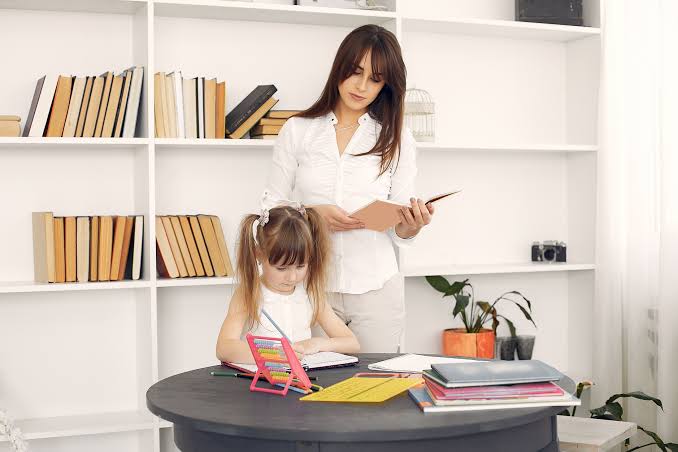
Texas has released its first annual demographic report for the new Education Freedom Accounts program. More than 85,000 students have funded accounts, including homeschool families receiving up to $2,000 for approved educational expenses.
Editorial Note
This article is provided for general educational and informational purposes and should not be treated as legal, tax, financial, homeschool-compliance, or individualized education advice. Texas Education Freedom Account rules, eligible expenses, award procedures, provider requirements, and funding levels may change as the program develops.
Texas Education Freedom Accounts are voluntary. Participation in TEFA is separate from Texas’s underlying homeschool law, and families who homeschool do not automatically receive state funding. Families must have applied, been found eligible, received an award, completed the required participation steps, and use funds according to program rules.
Texas Now Has Its First Real Picture of Who Is Using Education Freedom Accounts
Texas entered the 2026–27 school year with one of the largest new school-choice programs in the country.
Now the state has released its first detailed look at who is actually participating.
According to the Texas Comptroller’s first annual demographic report for the Texas Education Freedom Accounts program, 85,344 students had funded accounts between July 1 and July 24, 2026. More than 122,000 awards had been made overall, while more than 121,000 eligible students remained on the first-year waiting list as families continued confirming participation.
The numbers provide a more useful picture than the application totals alone.
Texas received approximately 274,000 applications, and more than 248,000 applicants were determined eligible. But an award does not automatically become a funded account. Families still have to select an eligible educational setting, confirm participation, and complete other required steps before a student becomes a funded participant.
For homeschool families, the program represents something Texas historically did not provide at this scale: direct access to public funds for approved home-education expenses.
Homeschool Families Can Receive Up to $2,000 Per Student
Students who participate through the homeschool/other category may receive up to $2,000 for the 2026–27 school year.
That amount is substantially lower than the award available to students enrolled in participating private schools. Texas has set the standard private-school award at $10,474 per student for the first year of the program, while certain students with disabilities attending participating private schools may qualify for higher amounts under the program’s special-education formula.
The distinction reflects how Senate Bill 2 structured the program.
Texas did not create a system where every participating child receives the same amount regardless of educational setting. Instead, lawmakers established different funding levels depending on how families use the program.
For homeschool households, $2,000 may not cover the full cost of educating a child at home, but it can meaningfully offset expenses such as curriculum, books, educational software, tutoring, classes, and other approved services.
That changes the economics of homeschooling for some families.
Families Cannot Simply Receive $2,000 in Cash
One important misconception is that the state is simply sending homeschool parents a $2,000 check.
That is not how TEFA works.
Participating families use funds through the program’s approved marketplace and payment system for qualifying education-related goods and services. Texas maintains a provider and vendor system covering categories including curriculum, books, tutoring, online learning, foreign languages, technology, arts, STEM, physical education, career preparation, and other educational services.
The funds remain restricted public education dollars.
Families are expected to use them for approved educational purposes, and the program includes audits and compliance requirements designed to confirm eligibility and lawful expenditures.
That distinction is important because participation introduces a relationship with a state-administered funding system that families who homeschool entirely with private resources do not otherwise need.
Some families may see that as valuable support.
Others may decide the funding is not worth the additional rules and administrative requirements.
Both decisions are possible under the voluntary program.
Nearly One in Four Participants Has a Qualifying Disability
One of the most significant findings in the first annual report involves students with disabilities.
The Comptroller reports that almost 25% of participating students have a qualifying disability.
That figure matters because school choice debates frequently focus on families seeking alternatives when traditional school environments do not adequately meet a child’s individual needs.
For some families, homeschooling may provide flexibility in pacing, scheduling, instructional method, sensory environment, or access to individualized services.
TEFA can also be used for certain tutoring, therapies, online learning, and other approved educational services.
Still, families should understand that leaving public school can change the legal framework surrounding special education.
A child educated privately or at home does not necessarily retain the same entitlement to services that would apply if the child were enrolled in a public school under the Individuals with Disabilities Education Act.
The availability of state funding should therefore not be confused with identical special-education rights across educational settings.
Most Participants Are From Lower-Income Households
The demographic report also challenges the assumption that the program is being used primarily by wealthy families.
According to the Comptroller, approximately 80% of participating students are from households earning less than 200% of the federal poverty level. The state identified that level as approximately $66,000 annually for a family of four during the program’s first-year rollout.
That result is partly explained by the program’s priority system.
Senate Bill 2 established tiers giving priority to students with disabilities and families at lower income levels when applications exceeded available funding.
Texas therefore did not distribute the first-year accounts purely on a first-come, first-served basis.
The priority structure was designed to move lower-income families and certain students with disabilities toward the front of the line.
That does not end the policy debate over who ultimately benefits from school-choice programs, but the early Texas data should be described accurately.
The first funded population is heavily weighted toward households the law specifically prioritized.
More Than 121,000 Eligible Students Are Still Waiting
The first-year program has also demonstrated something else: demand substantially exceeds available funding.
The annual report says more than 121,000 eligible students remained on the year-one waiting list at the time of the snapshot.
The Comptroller has described that as the largest school-choice waiting list in the country.
Whatever someone’s position on education savings accounts, the number demonstrates significant family interest.
Some applicants may ultimately decide not to participate. Others may move from private-school status into the lower-cost homeschool/other category, which can free enough funding for additional students to receive awards.
That has already happened.
When previously awarded students selected the homeschool/other option instead of private school, their award fell to $2,000, allowing the program to redistribute funds to additional waitlisted students. In May, the state said 3,317 waitlisted students received awards partly because of funding made available through those changes and opt-outs.
The program therefore remains fluid even after the initial awards.
Texas Has Already Funded Students Across Most of the State
Participation is geographically widespread.
The Comptroller’s annual report identifies 895 school districts with at least one funded TEFA participant based on parent-reported district of residence. It also identifies thousands of campuses associated with participating students’ prior or reported educational locations.
That matters because school-choice policy can sometimes be discussed as though it is primarily an urban issue.
Texas is enormous, and education alternatives look very different depending on location.
A family in Houston, Dallas, or San Antonio may have numerous private schools, tutors, therapy providers, and specialized educational programs within driving distance.
A rural homeschool family may have far fewer local providers and may rely more heavily on curriculum, online instruction, or traveling significant distances for specialized services.
The same $2,000 account can therefore have very different practical value depending on where the student lives.
Program access is not only about whether money exists.
It is also about whether families can find something useful and approved to purchase with it.
The Marketplace Will Matter Almost as Much as the Funding
The TEFA marketplace has become one of the most important parts of the program for homeschool families.
The state’s provider finder currently includes educational services across categories such as books and workbooks, complete curricula, mathematics, science, foreign language, coding, arts, career preparation, physical education, martial arts, tutoring, educational software, and online learning platforms.
That creates opportunities for families to assemble more customized educational programs.
A child could potentially use one provider for mathematics, another for language learning, a local instructor for music, and a separate online platform for science.
That flexibility aligns naturally with homeschooling.
It also creates a new responsibility for parents.
More options do not automatically create better education.
Families still have to judge curriculum quality, instructor qualifications, student needs, learning progress, and whether a particular service is actually worth the cost.
Public funding can expand access.
It cannot make those educational decisions for the family.
Texas Has Added Credential Rules for Some Instruction
The program also demonstrates how accepting public funding can introduce requirements that do not normally apply to independent Texas homeschool families.
Texas published an educator credential policy in July stating that when TEFA funds are used for certain teaching or tutoring services outside a participating school, students must have a lead educator who meets specified qualification requirements and is responsible for instruction.
That does not mean Texas has imposed a general teacher-certification requirement on homeschooling.
It has not.
The Texas Education Agency continues to explain that homeschooling in Texas operates outside the public-school system, and Texas does not regulate homeschool programs in the same manner as public schools.
The difference is important.
A family homeschooling entirely outside TEFA remains governed by Texas homeschool law.
A family voluntarily using TEFA funds must also comply with rules attached to that public funding.
The funding program and homeschool law overlap, but they are not identical.
Homeschool Families Must Confirm Their Status to Receive the Full Award
Another practical deadline matters for families already awarded accounts.
The state says students must either confirm enrollment in a participating private school or confirm their homeschool/other status by September 15 to receive their full available award.
That means receiving an award notification does not finish the process.
Families who were approved but have not completed the required confirmation steps can still affect how much funding ultimately reaches participating students and how much money becomes available for the waitlist.
This is part of why the current participation totals should be viewed as a snapshot rather than a final first-year number.
The Comptroller has said participation will continue changing as additional families complete confirmations and remaining awards are processed.
The Program Is Already Changing the Homeschool Policy Debate
For decades, Texas homeschooling was largely defined by what the state did not do.
The state did not operate homeschool programs, approve individual curricula, register most families through a conventional public-school process, or directly finance ordinary homeschool expenses.
TEFA creates a different relationship for participating households.
Texas is now paying for approved home-education expenses while establishing rules for how those particular public funds can be used.
That creates an important policy question:
Can Texas financially support homeschool families without gradually turning financial participation into broader regulation of homeschooling itself?
Supporters may argue that the program respects parental freedom because families decide voluntarily whether to participate.
Critics and some homeschool advocates may worry that accepting public dollars creates an administrative pathway through which future lawmakers could attach additional requirements.
The first year does not answer that question.
It begins testing it.
Public-School Funding Will Remain Part of the Debate
School-choice programs inevitably raise questions about public schools.
Supporters of TEFA argue that education funding should follow families toward educational environments that work best for their children.
Critics argue that public money used outside district schools could weaken the financial base of the system responsible for educating the overwhelming majority of Texas students.
The policy discussion becomes particularly complicated because the effects are not always immediate or one-for-one.
Many participating students were already outside public schools before receiving TEFA funding, meaning the state may now be subsidizing educational expenses families previously paid themselves.
Other participants may leave public schools because the account makes another option financially possible.
Those groups have different implications for state education spending.
As better data becomes available, Texas should distinguish between students who were already in private or homeschool settings and students whose educational setting changed because of TEFA.
That will help policymakers evaluate what the program is actually doing rather than what either supporters or critics predicted it would do.
$2,000 Can Help Without Paying for an Entire Homeschool Education
For many homeschool families, the $2,000 award should be understood as supplemental support rather than complete educational funding.
The cost of homeschooling varies enormously.
One family might rely heavily on libraries, inexpensive curriculum, parent-led instruction, and free online resources.
Another might purchase comprehensive curriculum packages, private tutoring, laboratory courses, music lessons, therapy, sports instruction, or advanced online classes.
For the first family, $2,000 could cover a substantial portion of annual expenses.
For the second, it might cover only one or two specialized services.
The policy therefore does not create a uniform homeschool experience.
It increases the resources some participating families can allocate toward an educational plan they still largely design themselves.
The Bigger Question Is Whether the Money Improves Learning
The first-year participation numbers are politically significant.
They are not yet evidence of educational success.
Texas can measure how many families applied, how many accounts were funded, how much money was spent, and what kinds of vendors families selected.
The harder question is whether students learn more effectively.
Do families gain access to tutoring they could not previously afford? Do students with disabilities receive services better suited to their needs? Does curriculum quality improve? Are families satisfied after several years rather than only during the launch?
Those outcomes take longer to evaluate.
The danger in any education initiative is confusing participation with effectiveness.
High demand tells us families want the option.
It does not tell us everything about what happens after they receive it.
What Texas Homeschool Families Should Watch Next
The next year will reveal much more about how TEFA works in practice.
Families should watch how the state handles approved expenses, provider availability, reimbursement disputes, audits, technology limits, educator qualifications, and future funding levels.
They should also pay attention to legislative changes.
The first year is funded through the $1 billion appropriation established for the program’s initial biennium, and future legislatures will determine how large the program becomes.
Demand already exceeds the available first-year funding.
That creates political pressure to expand the program.
If funding grows, lawmakers will also face decisions about accountability, eligibility, priority rules, and whether the homeschool award remains at $2,000.
The current program is therefore unlikely to be the final version of Texas school choice.
It is the beginning of a much larger policy experiment.
Key Takeaways
Texas’s first annual Education Freedom Accounts demographic report shows 85,344 students had funded accounts during the initial July funding period, while more than 122,000 awards had been made and more than 121,000 eligible students remained on the waiting list.
Families who select the homeschool/other category can receive up to $2,000 per student for the 2026–27 school year and may use those funds for qualifying education-related goods and services through the TEFA system.
Nearly one-quarter of funded participants have a qualifying disability, and approximately 80% come from households below 200% of the federal poverty level, reflecting the priority structure established by Texas law.
Participation is voluntary. Texas has not transformed ordinary independent homeschooling into a state-run program, but families who accept TEFA money must comply with the rules attached to that public funding.
The first-year numbers demonstrate substantial demand for education alternatives. They do not yet establish whether the program improves student outcomes, which should become one of the most important questions as Texas evaluates TEFA over time.
Frequently Asked Questions
How much can Texas homeschool families receive through TEFA?
Homeschool/other participants can receive up to $2,000 per eligible student for the 2026–27 school year.
Does every homeschool student in Texas automatically qualify?
No. Families had to apply during the application period, meet eligibility requirements, receive an award, and complete participation requirements. The first application window is closed for 2026–27.
Can families spend the $2,000 however they want?
No. Funds must be used for approved educational expenses through TEFA’s authorized purchasing and provider systems.
Does accepting TEFA funding change Texas homeschool law?
Participation adds program requirements connected to the public funds, but it does not mean Texas has converted all homeschooling into a state-regulated school program. Families that do not participate continue homeschooling under the state’s ordinary legal framework.
How many students are currently funded?
The state’s August annual report says 85,344 students were funded between July 1 and July 24, with participation continuing to change as families confirm awards.
Final Thoughts
Texas has moved beyond debating whether an education savings account program should exist.
It now exists, families are using it, and the first participation data is beginning to show what the program actually looks like.
For homeschool families, the change is particularly important.
Texas has historically provided families broad freedom to educate children at home while largely leaving the financial responsibility with parents. TEFA introduces public funding into that relationship.
For some households, $2,000 may make tutoring, specialized curriculum, technology, or educational services possible when those options previously felt out of reach.
For others, the amount may not be substantial enough to justify participating in a government-administered funding system.
That choice belongs to individual families.
What should matter to policymakers is whether the program remains transparent, accessible, financially responsible, and focused on educational value.
The early numbers show strong demand.
The next phase should focus less on how many accounts Texas can create and more on what those accounts enable students to learn.
School choice is ultimately not successful because money moved from one account to another.
It is successful only if students receive better opportunities because of it.
Support New To Education
New To Education provides independent educational reporting and analysis covering homeschooling, school choice, education funding, student rights, family education, and public policy.
Our goal is to help families understand changing education systems while distinguishing legal requirements, political arguments, program rules, and actual educational outcomes.
Related Articles
Texas Homeschool Families Enter the First Week of Education Freedom Account Funding
Why State Homeschool Rules Should Shape Your Plan Before Curriculum
Sources
Texas Comptroller — 2026–27 Texas Education Freedom Accounts Annual Demographic Report
Texas Comptroller — Record-Setting Demand for Education Freedom in Texas
Texas Education Freedom Accounts — Official Program Information
Texas Education Freedom Accounts — Information for Families
Texas Education Freedom Accounts — Funding Timelines and Installments
Texas Education Freedom Accounts — Educator Credential Policy
Texas Legislature — Senate Bill 2, Enrolled Version