
Halfway through the year is a good time to look at your money before small problems turn into expensive ones.
This is not about chasing perfect budgeting or making dramatic cuts overnight. It is about taking one honest look at your cash flow, your safety cushion, your credit, and your paycheck settings while there is still time to adjust.
That matters because household finances are still under pressure. In its May 13, 2026 report on U.S. households, the Federal Reserve said 63% of adults could cover a hypothetical $400 emergency expense using cash, savings, or a credit card paid off at the next statement. It also said 59% of adults had at least one major unexpected expense in the prior 12 months. In other words, surprise costs are common, and not everyone is ready for them.
The good news is that a useful reset does not need to be complicated.
Sourced facts in this article come from official public resources. The step-by-step reset method below is general educational guidance, not individualized tax, legal, or financial advice.
1. Review the last 90 days before you change the next 90
Start with what actually happened, not what you hoped would happen.
Pull up the last three months of bank and credit card transactions. Do not begin by creating new categories or downloading complicated software. First, scan for patterns:
- bills that rose quietly
- subscriptions you forgot about
- restaurant, delivery, and convenience spending that became routine
- irregular expenses that were predictable in hindsight
- transfers from savings back into checking
A simple rule works well here: circle the expenses that were necessary, highlight the ones that were meaningful, and mark the ones you would not miss next month.
This is general educational guidance, but the goal is practical: find one or two leaks large enough to matter. A $15 subscription is fine to cut, but a $250 monthly habit is what actually changes your budget.
If your spending feels random, build a very short system for the rest of the year:
- fixed bills
- flexible essentials
- fun spending
- savings and debt goals
That framework is often enough. You do not need an elaborate spreadsheet to make better decisions.
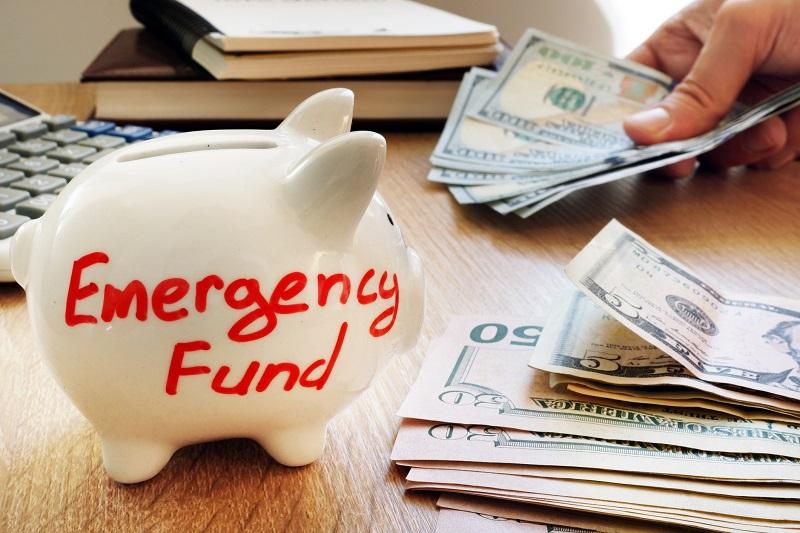
2. Rebuild your emergency fund around real life, not a textbook number
Emergency funds are often explained as a giant target, which can make the whole idea feel discouraging. A better approach is to build in layers.
The Federal Reserve data above is the reason this matters. Unexpected expenses are common, and many households still struggle with even modest shocks.
A practical midyear reset looks like this:
First, aim for a small “friction reducer.” That could be enough to handle a copay, a car battery, or a higher-than-usual utility bill without going straight to a credit card.
Next, build toward one month of essential expenses. That is often a more motivating milestone than jumping straight to three or six months.
Then decide where the money lives. Official FDIC data from May 18, 2026 shows national average savings rates remain low overall, with the average savings account at 0.38% and the average money market account at 0.57%. That does not mean you cannot find better rates. It means you should not assume your current bank is paying a competitive one.
General guidance: for short-term emergency money, prioritize safety, fast access, and low risk over squeezing out every last bit of yield. Compare your current account with other insured savings options, but keep the fund somewhere you can actually reach when life goes sideways.
3. Check your credit reports while free weekly access still exists
Many people only think about credit when they need a loan. That is too late.
The FTC says the three nationwide credit bureaus have permanently extended free weekly credit reports through AnnualCreditReport.com. The FTC also says that only AnnualCreditReport.com is authorized to fill orders for the free reports you are entitled to by law.
That makes a midyear credit check easy and worthwhile.
You are not checking because you plan to borrow tomorrow. You are checking because mistakes, outdated balances, and identity-theft issues are easier to fix early than under deadline.
Look for:
- accounts you do not recognize
- late payments that look wrong
- old addresses or employer information that should be updated
- balances that appear inaccurate
- collection items that need review
General guidance: if you spot a problem, document it and dispute it with both the credit bureau and the company that supplied the information. If everything looks clean, set a reminder to check again later instead of waiting until you apply for housing, insurance, or credit.
4. Make sure your paycheck withholding still matches your life
A midyear reset should include one boring but important check: taxes coming out of your paycheck.
The IRS says to check withholding every January and after major life changes, including a new job, major income change, marriage, divorce or separation, child birth or adoption, or a home purchase. Its online Tax Withholding Estimator can help W-2 workers and some pension recipients estimate whether withholding is on track and generate a pre-filled Form W-4 or W-4P.
This is not about chasing the biggest refund possible. For many households, a huge refund means too much cash was unavailable during the year. On the other hand, too little withholding can create an unpleasant bill later.
General guidance: if your pay, side income, or family situation changed in 2026, do a quick estimator check now rather than waiting for tax season. If your situation is complex, use the IRS tool as a starting point and get professional tax help before making major decisions.
5. Put the rest of the year on one calendar
A lot of money stress comes from “surprises” that were not really surprises.
Think about the next six months:
- school expenses
- travel
- holiday spending
- annual insurance premiums
- registration fees
- medical appointments
- home or car maintenance
Write them on one calendar now. Add rough dollar estimates if you can.
This is general educational guidance, but it is one of the simplest ways to improve cash flow. When an irregular bill becomes visible ahead of time, it stops competing with rent, groceries, and minimum payments at the last minute.
If you want one useful habit for the second half of the year, make it this: before each new month begins, look one month ahead and pre-decide what needs to be set aside.
The point of a midyear reset
A money reset is not a verdict on whether you have been “good” or “bad” with money.
It is a maintenance habit.
You are checking whether your system still fits your life. If it does not, now is the time to make it simpler, safer, and a little more honest.
That might mean trimming one recurring expense, moving emergency savings to a better account, correcting a credit report error, or updating a W-4 after a pay change. None of those steps is flashy. All of them are useful.
If you spend one hour on this before the month ends, your future self will probably feel the difference.
Action Checklist
- Review the last 90 days of spending and identify your top two cash leaks.
- List your next six months of irregular expenses on one calendar.
- Check how much you currently have set aside for true emergencies.
- Compare your emergency savings account with other insured cash options.
- Pull your free credit reports at AnnualCreditReport.com.
- Dispute any credit-report errors with the bureau and the reporting company.
- Use the IRS Tax Withholding Estimator if your income or household situation changed.
- Set a 30-minute money check-in for the start of next month.
Sources
- Federal Reserve, Economic Well-Being of U.S. Households in 2025 (published May 13, 2026): https://www.federalreserve.gov/publications/2026-economic-well-being-of-us-households-in-2025-executive-summary.htm
- IRS, Tax Withholding Estimator (page last reviewed March 26, 2026): https://www.irs.gov/individuals/tax-withholding-estimator
- FTC, Free Credit Reports: https://consumer.ftc.gov/articles/free-credit-reports
- AnnualCreditReport.com official site: https://www.annualcreditreport.com/index.action
- FDIC, National Rates and Rate Caps – May 2026 (revised May 18, 2026): https://www.fdic.gov/national-rates-and-rate-caps