





Editorial Note
This article is intended for educational and informational purposes only. It summarizes publicly available information from Japan’s Ministry of Education, Culture, Sports, Science and Technology and related public education sources. School lunch policies, funding details, application timelines, and implementation plans may change over time. Readers should consult official MEXT materials, local boards of education, and school authorities for the most current information.
On July 6, 2026, Japan reached an important deadline in a school lunch initiative that may seem small at first but speaks to a much larger education shift.
Japan’s Ministry of Education, Culture, Sports, Science and Technology, commonly known as MEXT, closed the second application period for a model project focused on increasing the use of local products, organic agricultural products, and similar ingredients in school lunches. The project also connects those meals to food education, helping students learn about local culture, agriculture, sustainability, producers, and the food systems behind what they eat at school.
This matters because Japan’s school lunches are not just meals. In many schools, lunch is part of the educational day. Students learn routines, responsibility, nutrition, manners, cooperation, and appreciation for food. By focusing on local and organic ingredients, MEXT is pushing schools to think more deeply about how lunch can become a classroom for sustainability and community connection.
What Happened on July 6, 2026?
MEXT’s second call for applications for the school lunch model project closed on July 6, 2026, at 5:00 p.m. The project is officially focused on promoting the use of local products, organic agricultural products, and similar ingredients in school lunches while strengthening food education.
According to MEXT, using local and organic agricultural products in school lunches can help students understand regional food culture, local industries, gratitude toward producers, environmental impact, and sustainable food production. The ministry also acknowledges that using these ingredients is not simple. Schools may face challenges securing enough ingredients, coordinating with producers, and managing regular communication among schools, education boards, local government departments, farmers, fishery-related offices, distributors, and other partners.
That is why this model project matters. Japan is not only telling schools to use better ingredients. It is asking local governments and education systems to test practical models that could show how this can work in real communities.
Why School Lunch Matters in Japan
In Japan, school lunch often has a stronger educational role than many people outside the country realize.
Lunch is not only about feeding students. It can also teach nutrition, hygiene, teamwork, social responsibility, and appreciation for the people who prepare and produce food. In many schools, students help serve meals, clean up afterward, and eat together in a structured routine. That makes lunch part of school culture, not just a break from learning.
This is why a project involving local and organic ingredients is important. If school lunch is already part of education, then the food itself becomes part of the lesson. Students can learn where ingredients come from, how food is grown, why regional agriculture matters, and how daily choices connect to the environment.
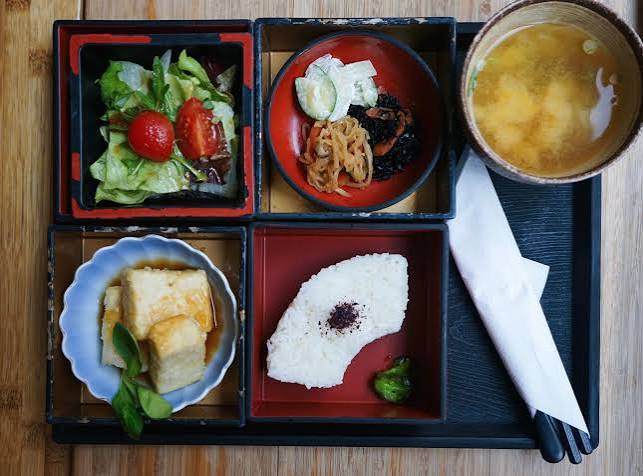
A lunch tray can become a lesson in science, social studies, health, economics, and community.
Local Ingredients Can Connect Students to Their Communities
One of the strongest parts of this initiative is the focus on local products.
When students eat food grown or produced near their own communities, they can begin to see the connection between school and the world around them. A vegetable is no longer just something on a plate. It may come from a farm in the same prefecture. Rice may come from nearby fields. Fish may connect to local waters and regional industries.
That kind of connection can make learning more real.
For younger students, local food can help build curiosity. Who grew this? Where did it come from? Why is this food common in our region? For older students, it can lead to deeper conversations about agriculture, food supply chains, rural economies, climate change, labor, sustainability, and regional identity.
Education becomes more powerful when students can connect what they learn to their own communities.
Organic Ingredients Bring Opportunity and Challenges
The project also includes organic agricultural products, which adds another layer to the conversation.
Organic ingredients can support lessons about soil health, pesticide use, farming methods, biodiversity, and environmental sustainability. For students, this can make food education more practical. Instead of discussing sustainability as an abstract idea, schools can connect it to the food students actually eat.
However, MEXT’s own project description recognizes a major challenge: schools need reliable quantities of food. A school lunch system must serve many students on a regular schedule. That means local and organic suppliers must be able to provide enough ingredients at the right time, in the right condition, and at a price schools can manage.
This is where good policy becomes complicated. The idea is attractive, but implementation requires planning. Schools, producers, distributors, and local governments have to coordinate carefully.
That is probably why MEXT is using a model project approach. Before expanding an idea nationally, Japan needs examples showing what works, what fails, and what support schools actually need.
Food Education Is About More Than Nutrition
Food education is often misunderstood as simply teaching students to eat vegetables or avoid too much sugar. Those topics matter, but food education can go much deeper.
A strong food education program can help students understand culture, agriculture, labor, sustainability, family habits, regional history, and public health. It can also help students become more thoughtful consumers.
For example, a lesson connected to school lunch might help students learn how rice is grown, why certain vegetables are seasonal, how climate affects harvests, why food waste matters, or how local farmers contribute to community life.
That kind of learning is practical. Every student eats. Every family buys food. Every society depends on food systems. When students understand food better, they may also understand their communities better.
Schools Cannot Do This Alone
One important lesson from MEXT’s project is that schools cannot carry every responsibility by themselves.
Using local and organic products in school lunches requires cooperation beyond the classroom. Schools may need support from local governments, agricultural departments, fishery departments, producers, distributors, nutrition staff, school lunch centers, and boards of education.
Teachers may help connect meals to learning, but they should not be expected to solve supply chain problems alone. Nutritionists and school lunch staff may understand menu planning, but they also need stable purchasing systems. Local producers may want to participate, but they need clear demand, timelines, and communication.
That is why this project is really about systems. It asks whether a community can organize itself so that school lunch supports student learning, local producers, and sustainability at the same time.
Why This Matters for Rural and Regional Japan
This issue also connects to Japan’s regional future.
Many rural communities in Japan face aging populations, shrinking school enrollment, labor shortages, and pressure on local industries. Food education connected to local agriculture can help students see value in their own regions. It can also help schools become more connected to local producers and community life.
This does not mean every student will become a farmer or food producer. But it does mean students may gain a stronger understanding of the people and industries that support their daily lives.
In areas where students may eventually leave for university or work, school-based community learning can still matter. It helps students understand where they come from and why local economies deserve attention.
What Parents and Educators Should Watch
Parents and educators should watch how these model projects are selected and implemented.
The most important question is not whether local or organic food sounds good. The question is whether schools can make it work consistently, affordably, and educationally.
Parents may want to know whether the meals remain balanced, whether costs change, whether students enjoy the food, and whether schools explain the learning behind the ingredients. Educators may want to know how much extra planning is required, whether teaching materials are provided, and whether the project supports classroom learning instead of becoming another burden.
A strong model project should not only change what is served at lunch. It should help schools teach students why the change matters.
The Bigger Picture for Japanese Education
Japan’s July 6 school lunch deadline may not be as dramatic as a major curriculum reform or new technology policy, but it fits into a larger education story.
Japan is trying to prepare students for a changing society. That includes digital learning, international education, curriculum reform, school safety, student support, and sustainability. Food education belongs in that larger picture because it teaches students about health, environment, community, and daily responsibility.
In many ways, school lunch is one of the most practical forms of education. Students do not only hear about sustainability. They taste it. They do not only hear about local culture. They eat food connected to it. They do not only learn gratitude as an idea. They practice it through daily routines.
That makes this initiative more important than it may look at first.
Key Takeaways
On July 6, 2026, MEXT’s second application period closed for a model project focused on promoting local and organic agricultural products in school lunches while strengthening food education.
The project reflects Japan’s broader effort to make school lunch more connected to learning, sustainability, local communities, and regional food systems. It also recognizes real challenges, including ingredient supply, cost, coordination, and communication among schools, education boards, producers, distributors, and local government departments.
For New To Education readers, the bigger lesson is simple: education does not only happen through textbooks. It can happen through daily routines, community partnerships, and even the food students eat at school.
FAQ
What happened in Japan’s schools on July 6, 2026?
On July 6, 2026, MEXT’s second application period closed for a model project focused on increasing the use of local products, organic agricultural products, and similar ingredients in school lunches while strengthening food education.
Why is Japan focusing on local and organic school lunch ingredients?
MEXT says local and organic ingredients can help students learn about regional food culture, local industries, gratitude toward producers, environmental impact, and sustainable food production.
Who could apply for the model project?
MEXT’s public notice listed eligible applicants as prefectural and municipal government departments connected to agriculture, fisheries, or education boards.
How much funding is connected to the project?
MEXT’s second call listed a maximum委託額, or contract amount, of 6.7 million yen per project, with three projects expected to be selected.
Why does this matter for students?
It matters because school lunch can become part of real-world learning. Students can learn about nutrition, local communities, agriculture, sustainability, food waste, and the people who produce what they eat.
Related Articles
Education in Japan: Reform, AI, and the Pressure to Prepare Students for a Changing Future
Japan Selects 69 New High Schools to Help Lead Education Reform
Sources
MEXT — Second Call for the School Lunch Local and Organic Products Food Education Model Project
MEXT — Original Call for the School Lunch Local and Organic Products Food Education Model Project




