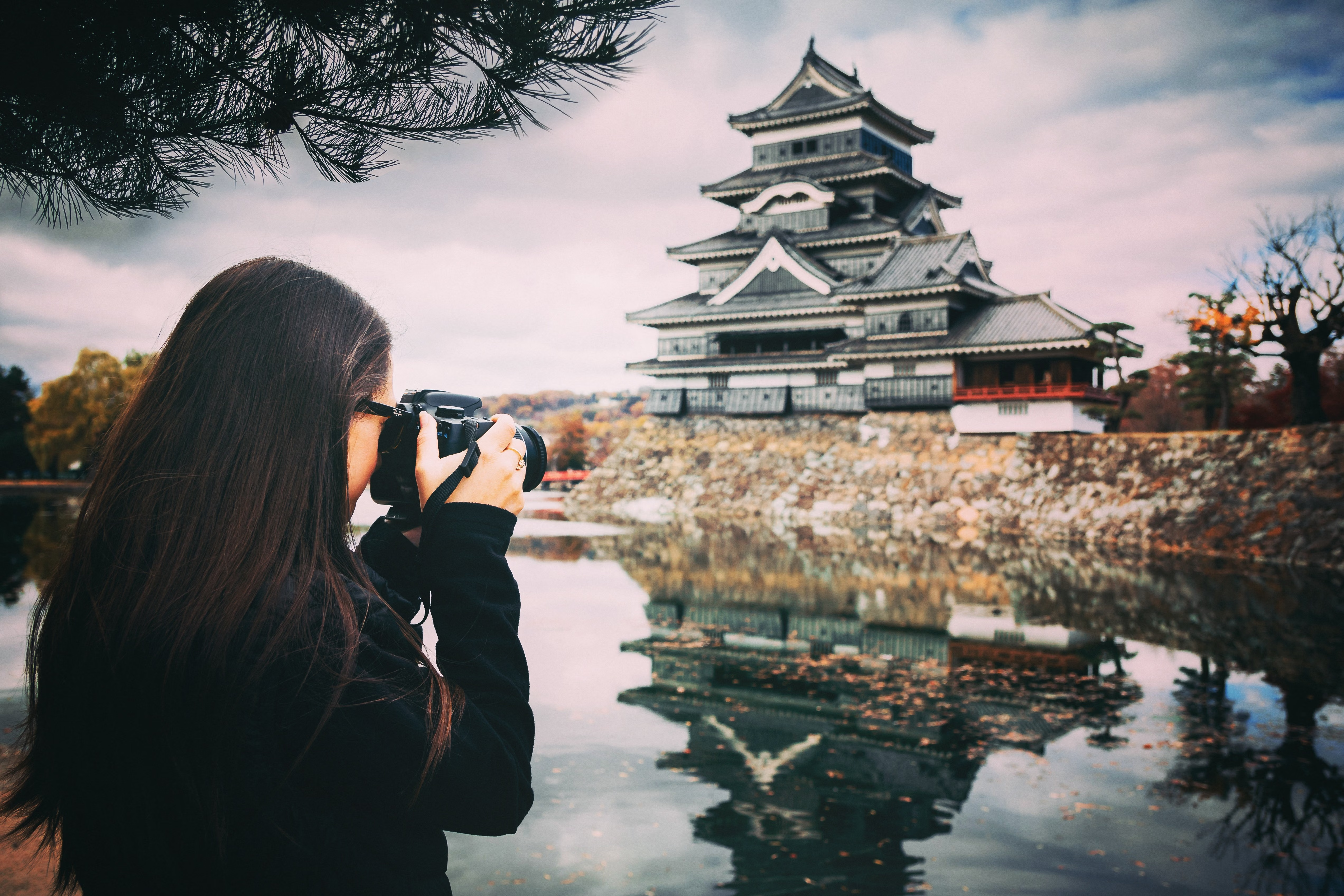

Japan is one of those places that remote workers talk about for years before they actually book it.
The appeal is obvious: world-class public transportation, reliable infrastructure, deep neighborhood culture, strong personal safety in many everyday settings, and enough variety that a long stay does not have to feel repetitive. But for a long time, Japan sat in an awkward category for many remote workers. It was easy to visit as a tourist if your passport qualified, but much less straightforward if you wanted to stay longer while continuing remote work.
That is why Japan’s digital nomad route matters. It gives some remote workers a legal option for a medium-length stay that is longer than a typical short visit but still clearly temporary.
The catch is that this is not a universal “move to Japan” pass. It is a narrow planning tool. If you treat it that way, it becomes useful. If you project residency, tax certainty, or lifestyle fantasy onto it, it gets confusing fast.
What the official rules actually say
Japan’s Ministry of Foreign Affairs states that the digital nomad stay period is six months and that no extension will be granted. The route is designed for individuals who wish to work remotely in Japan for a period not exceeding six months.
That single detail shapes the whole strategy.
This is not a pathway for someone who wants to arrive casually and “figure it out later.” It is a defined temporary stay. Your planning should assume a clean entry, a fixed window, and a clean exit.
MOFA also lists several concrete requirements, including:
- proof that annual income is at least JPY 10 million
- proof of insurance covering death, injury, or illness during the stay
- medical-treatment coverage of at least JPY 10 million
- documents explaining planned activities and intended period of stay
In other words, this option is aimed at established remote earners, not experimental budget travelers.
Who this visa fits well
The best candidate is someone who already works remotely in a stable way and wants Japan to be a temporary base, not a vague life pivot.
That might include:
- a freelancer with recurring clients outside Japan
- a founder running a location-independent business
- a remote employee whose employer allows international work
- a consultant who wants one concentrated six-month season abroad
This route fits especially well if you want enough time to build a real routine. Three to six months gives you room to do more than rush between tourist highlights. You can choose a neighborhood carefully, settle into a work rhythm, and still travel on weekends.
It can also be a better fit than short tourism if your main goal is not constant sightseeing, but structured living with work built in.
Who should probably skip it
Not every Japan dream needs a digital nomad visa.
If your trip is mainly a vacation, a short creative reset, or a one- to two-month stay with flexible sightseeing, a standard tourism path may be simpler if your nationality qualifies. JNTO notes that some travelers can stay up to 90 days for tourism without a visa, depending on passport and entry rules.
Just as important, JNTO also says tourism status does not allow paid work. That means the “I’ll just enter as a tourist and keep working quietly online” mindset is exactly the kind of gray-area thinking people should avoid.
You should also think twice if:
- your income does not clearly meet the threshold
- your insurance situation is weak or unclear
- your employer has strict overseas work limits
- you want a path to long-term residence from this stay alone
- you need tax certainty before you go
The visa can support a temporary work-from-Japan chapter. It should not be mistaken for a long-term immigration solution.
The real planning question: six months for what?
The biggest mistake remote workers make is focusing only on approval and not on purpose.
Before you apply, answer this: what is the six months actually for?
Good answers include:
- testing whether Japan works for your routine
- shipping a major project while living somewhere inspiring
- combining focused work blocks with regional travel
- taking a deliberate sabbatical-style season without fully pausing income
Weak answers sound more like this:
- I just want to be in Japan and see what happens
- maybe I will stay longer somehow
- I assume I can sort the practical details after arrival
Japan rewards structured planning. The more specific your goal, the easier it becomes to choose city, housing, budget, and daily schedule.
Think beyond Tokyo fantasy planning
A lot of digital nomad content starts and ends with Tokyo. Tokyo can absolutely work, but it is not the only usable base.
The more important question is what kind of daily life you want:
- maximum convenience and transit density
- lower housing pressure
- quieter neighborhoods
- easier airport access
- better balance between work days and regional travel
Even if you choose Tokyo, you still need neighborhood logic. Being “in Tokyo” is not a plan. Being in a neighborhood with a realistic commute, solid internet, decent workspace options, and a daily rhythm you can sustain is a plan.
The same goes for accommodations. A six-month stay is long enough that bad ergonomic setup, thin walls, weak Wi‑Fi, or poor natural light can damage your work more than the destination helps it.
Build a legal and logistical buffer
JNTO’s visa page explicitly says rules can change and that its page is general tourist information rather than legal advice. That is a good reminder for nomads: do not make this a last-minute process.
Give yourself buffer for:
- documentation gathering
- insurance proof
- income verification
- employer or client coordination
- housing research
- entry timing
- backup plans if a detail changes
This is also the kind of move where “close enough” planning tends to backfire. If your stay depends on a specific rule, verify it with the official source rather than with a social post or a recycled blog article.
What a smart Japan nomad plan looks like
A strong plan is usually boring in the best way.
It includes a defined work schedule, a realistic budget cushion, documented insurance, a clear accommodation strategy, and an honest understanding of what status you are entering under. It also keeps expectations in check.
Japan can be an excellent remote-work base for the right person. But the win is not posting from a cafe on day three. The win is building a stable six-month season that is legally cleaner, less stressful, and more productive than a rushed tourism-style trip.
Final thought
Japan’s digital nomad visa is useful precisely because it is limited.
It gives qualified remote workers a structured way to spend real time in Japan without pretending that a six-month stay is the same thing as residency. If that matches your goal, it is worth serious consideration. If your trip is shorter, looser, or mainly recreational, a standard tourism route may still be the better fit.
The right decision is not the most exciting one. It is the one that matches your actual work, budget, and timeline.
Practical Checklist
- Confirm whether your passport and situation fit the official eligibility rules.
- Verify that your annual income clearly meets the JPY 10 million threshold.
- Confirm insurance coverage that satisfies the stated medical-treatment minimum.
- Decide whether your goal is tourism, remote work, or a true six-month base.
- Choose housing based on workability, not only aesthetics.
- Build a buffer for documents, approval timing, and last-minute rule changes.
- Keep legal, tax, and employment questions separate from travel inspiration.
- Recheck official government pages before booking anything nonrefundable.
Sources
- Ministry of Foreign Affairs of Japan, Digital Nomad Visa: https://www.mofa.go.jp/ca/fna/pagewe_000001_00046.html
- JNTO Entry and Visa Information: https://www.japan.travel/en/plan/visa-info/
- Ministry of Foreign Affairs of Japan, General Visa Information: https://www.mofa.go.jp/j_info/visit/visa/index.html