





Editorial Note
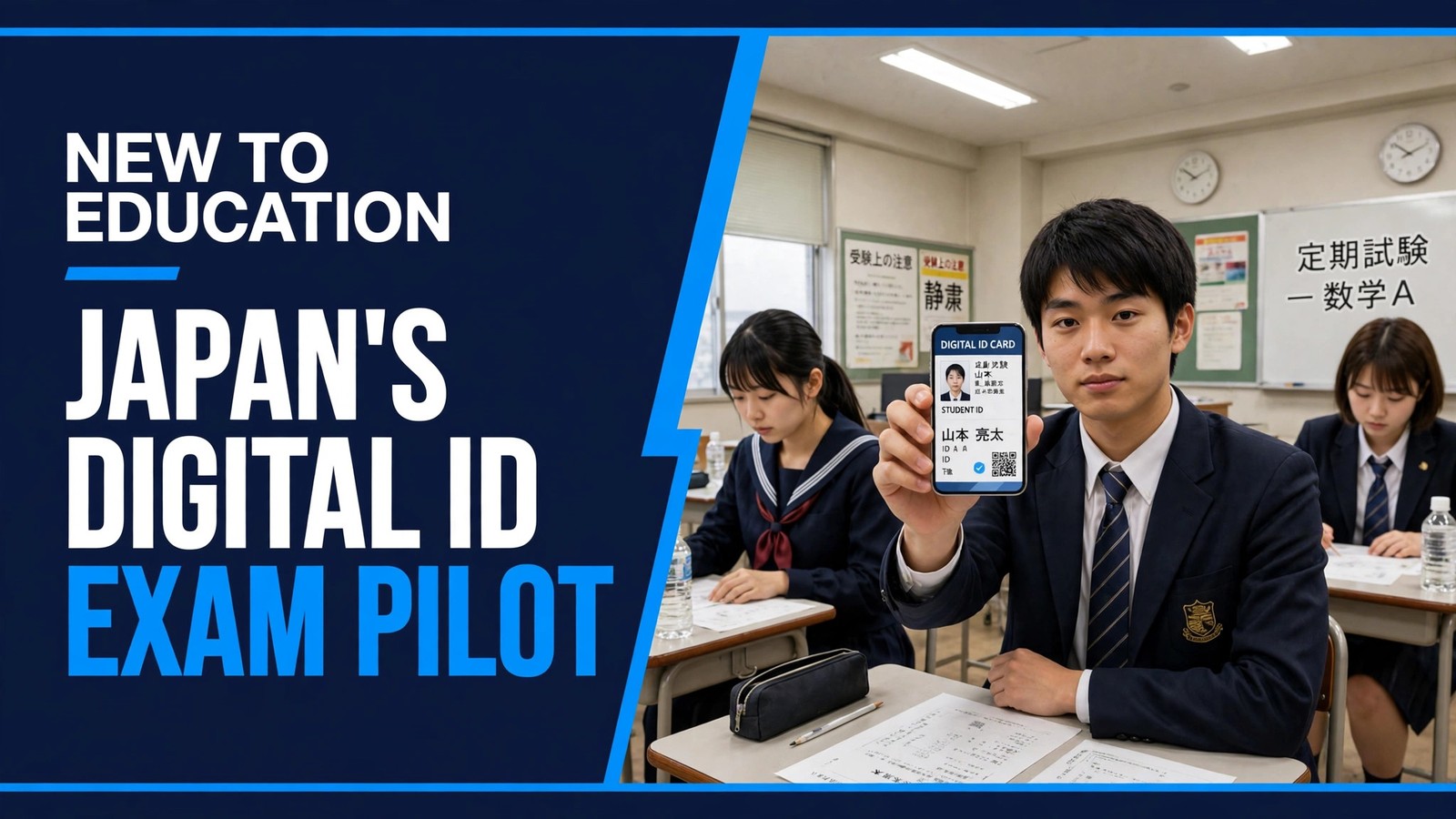
On November 27, 2026, Japan's Digital Agency announced a planned demonstration project examining how digital identity verification and digital credentials could be used in qualification examinations. The announcement identifies three participating examination systems and an anticipated demonstration period in early 2027.
The November 27 announcement is distinct from the future implementation of the pilot. It does not establish that candidates have already completed examinations using the new system or that digital identification has become mandatory nationwide.
The proposed use of personal identification and examination records raises important questions concerning privacy, accessibility and the reliability of digital qualifications. This article provides educational and policy information rather than individualized legal or data-protection advice.
Japan is preparing to test a new approach to examination identification and qualification verification using digital credentials connected to its My Number identification infrastructure.
The Digital Agency announced the initiative on November 27, identifying the EIKEN English proficiency examination, the Japan Chamber of Commerce and Industry bookkeeping examination and the Japan Statistical Society Certificate as participating examination systems.
The demonstration is expected to take place between mid-January and mid-February 2027.
Bottom Line
Japan intends to examine whether candidates can use digital identification and smartphone-based credentials to simplify examination procedures.
The proposed system would also allow examination results to be shared in a digitally verifiable format.
Participation in the demonstration will involve consenting candidates rather than every individual taking the identified examinations.
What Happened on November 27?
Japan's Digital Agency published an official announcement describing its qualification examination demonstration project.
The initiative brings together examination organizations and technology providers to explore ways of improving identity verification and the management of qualification records.
The agency has identified a preliminary implementation period involving multiple examination locations. Detailed venue-specific arrangements and individual participation requirements will need to be confirmed through subsequent announcements.
Which Examinations Are Participating?
The demonstration identifies three examination systems:
- EIKEN English proficiency examinations.
- Japan Chamber of Commerce and Industry bookkeeping examinations.
- Japan Statistical Society Certificate examinations.
These qualifications serve different educational and professional purposes. EIKEN assesses English proficiency, while bookkeeping and statistics qualifications measure knowledge relevant to business, accounting and quantitative analysis.
Other examination organizations, including those associated with Japanese-language proficiency, kanji proficiency and information technology examinations, are involved in the broader advisory process. Their involvement should not be confused with confirmed participation in the initial demonstration.
How the Digital Credential System Works
The proposed system connects identity verification with the issuance and management of digital credentials.
A participating candidate would establish their identity using the relevant My Number digital identification process. Examination eligibility information could then be issued as a digital credential and stored in a smartphone-based wallet.
At an examination location, the credential could be presented to support the verification process. Afterward, examination results could potentially be shared with institutions or employers in a format allowing them to authenticate the issuing organization and the credential's validity.
The demonstration is intended to evaluate these processes before any broader implementation decisions are made.
Why Digital Credentials Matter in Education
Students frequently need to provide evidence of academic qualifications when applying to universities, employers and professional training programs.
Traditional verification may involve printed certificates, separate confirmation requests or documents submitted directly by the issuing organization. These procedures can create administrative delays and additional costs.
Digitally verifiable credentials could make it easier to establish whether a qualification was issued by an authorized organization and whether the information has been altered.
However, a technically verifiable credential is not automatically equivalent to a qualification recognized by every university or employer.
Privacy and Personal Information
Examination records can contain information about a person's identity, academic performance and professional qualifications.
Digital credential systems therefore need clear rules governing information access and disclosure. Candidates should understand which information is being collected, who receives it and whether they can control what is shared.
Educational institutions should avoid requesting unnecessary personal information merely because a new verification system makes it technically available.
The pilot's consent-based approach provides an opportunity to examine these issues before considering wider participation.
Accessibility and Digital Exclusion
A smartphone-based examination system may be convenient for some candidates but difficult for others.
Students without compatible devices, individuals with disabilities and candidates experiencing technical problems may require alternative procedures.
A successful digital examination system should preserve equitable access rather than create a new barrier to obtaining qualifications.
Examination organizations will also need reliable contingency arrangements for connectivity problems and other technical interruptions.
What This Means for EIKEN Candidates
Students preparing for EIKEN should continue following the examination provider's current registration and identification instructions.
The Digital Agency announcement does not establish a new universal identification requirement for every EIKEN examination.
Candidates invited to participate in the demonstration should review the specific consent arrangements, technical requirements and examination-center instructions before deciding whether to take part.
What This Means for Schools and Employers
Educational institutions and employers may eventually benefit from more efficient verification of qualifications.
However, organizations should ensure that their systems can distinguish authentic credentials from unsupported claims about academic achievement.
They should also retain suitable alternatives for applicants whose qualifications were issued through conventional paper-based procedures.
Digital modernization should improve administrative reliability without unnecessarily narrowing educational or employment opportunities.
What This Does Not Mean
Japan has not made My Number identification mandatory for every qualification examination.
The announcement does not establish that paper certificates will be discontinued or that all examination organizations will adopt the same digital system.
The pilot also does not change the academic content or passing requirements of the participating qualifications.
Bigger Picture
Education systems increasingly need reliable methods of documenting learning across institutions, employers and national borders.
Digital credentials may support that objective when they are secure, accessible and recognized by the organizations receiving them.
Their effectiveness will depend on governance and institutional cooperation as much as technical design.
What Happens Next
The demonstration is expected to take place during January and February 2027.
Participating organizations will need to establish candidate instructions, examination-location arrangements and procedures for evaluating the system.
Subsequent reporting should examine actual participation, technical reliability, privacy protections and whether the demonstration leads to wider adoption.
Why This Matters
Reliable qualifications help learners demonstrate their knowledge and professional capabilities.
Japan's November 27 announcement represents an effort to improve the administrative infrastructure surrounding those qualifications without changing the educational assessments themselves.
The pilot will provide an opportunity to determine whether digital verification can deliver meaningful benefits while protecting candidates' rights.
Key Takeaways
- Japan's Digital Agency announced the demonstration November 27.
- EIKEN, bookkeeping and statistics examinations are participating.
- The pilot is expected during January and February 2027.
- Digital identity verification and verifiable credentials are central features.
- Participation will involve consenting candidates.
- No universal digital identification mandate has been established.
- Privacy, accessibility and alternative procedures remain important.
Frequently Asked Questions
Will I need a My Number Card to take EIKEN?
The announcement does not establish a universal new requirement. Candidates should follow the examination provider's current instructions.
Will the pilot change examination questions?
No change to examination content was established by the announcement.
Can employers verify examination results digitally?
The pilot is intended to explore that capability. Wider availability depends on subsequent implementation decisions.
Final Thoughts
Japan's proposed digital credential demonstration could contribute to a more efficient system for recognizing educational and professional achievement.
Its success should be measured not simply by the introduction of new technology, but by whether candidates gain a reliable, accessible and trustworthy way to demonstrate their qualifications.
Related Articles
EIKEN Test Preparation: A Study Plan for Japanese Students
Japan Releases 2026 National Academic Test Results as English Performance Raises Policy Questions
Support New To Education
Support educational reporting that helps learners understand developments in assessment, qualifications and education technology.
https://newtoeducation.com/support-us
Explore New To Education on Mobile
Adult learners and educators can discover tutors and educational resources through the New To Education iPhone application. The verified U.S. App Store listing carries an 18+ age rating.
https://apps.apple.com/us/app/new-to-education/id6792293782
Sources





Comments (0)
No comments yet. Be the first to share a thought.