

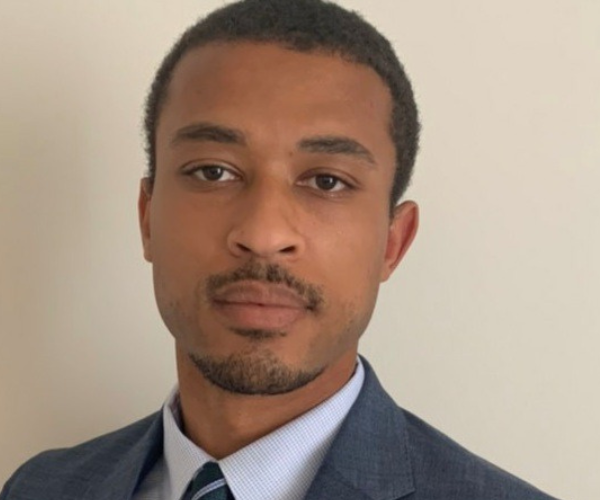


A former Miami-Dade elementary teacher faces expanding criminal allegations involving students. Florida law outlines how schools must report, investigate, reassign, and address serious educator misconduct.
A former Miami-Dade County elementary teacher is facing an expanding criminal case involving allegations from multiple students, but the story also raises a broader question for schools and families:
What is a school system legally required to do when serious allegations involving an educator and student safety arise?
Cesar Oriol Cardoso, 53, formerly taught at Sunset Park Elementary School in Miami-Dade County. He was arrested on September 11, 2026, and faces more than a dozen charges stemming from allegations involving elementary-age students.
Authorities allege that Cardoso engaged in inappropriate physical conduct with students and displayed sexually explicit material to some of them. On September 18, local reporting based on a new Miami-Dade Schools Police arrest report said another student had come forward with additional allegations.
The accusations are serious, but they remain allegations. Cardoso has not been convicted of the offenses discussed in this article and is entitled to the presumption of innocence in the criminal case.
Miami-Dade County Public Schools has said Cardoso was removed from the school in April after the district learned of the allegations, separated from district employment in May, and is permanently prohibited from obtaining future employment with M-DCPS.
That response brings the case directly into an important area of education law: the systems Florida uses to remove employees from student contact, report educator misconduct, notify state officials, and protect students while investigations continue.
Bottom Line: The criminal case against Cardoso will be decided through the justice system. Separately, Florida law creates a school-based misconduct process that can require reporting to the Department of Education, reassignment during investigations, continued investigation even after an educator leaves employment, and possible action against an educator's certification.
Editorial Note
This article discusses pending criminal allegations involving children and a former public-school teacher. The allegations have not been proven in court, and an arrest or criminal charge is not a conviction.
New To Education is not independently determining whether the alleged conduct occurred. Details of the accusations are kept limited because the educational purpose of this article is to examine school-safety procedures, educator reporting requirements, employment actions, and professional discipline rather than reproduce graphic allegations.
Criminal prosecution, school-district employment decisions, Florida educator-certification proceedings, child-protection investigations, and potential civil litigation are separate processes that can operate under different legal standards.
This article is provided for educational and informational purposes and does not constitute legal advice.
What Happened
Cardoso previously worked as a teacher at Sunset Park Elementary School in Miami-Dade County's Kendall area.
According to reporting based on Miami-Dade Schools Police arrest reports, investigators allege that inappropriate conduct involving several students occurred during the 2024–25 and 2025–26 school years.
The initial publicly reported case involved allegations from at least five students. On September 18, another student was reported to have come forward, resulting in additional allegations and charges.
Cardoso has been in custody since his September 11 arrest.
Miami-Dade County Public Schools has said that when allegations first came to the district's attention in April, Cardoso was removed from the school. His employment with the district ended the following month.
The district has also said he is permanently barred from seeking or obtaining future employment with M-DCPS.
That timeline matters because school systems do not have to wait for a criminal conviction before taking temporary employment measures designed to protect students.
A criminal court determines criminal guilt.
A school district has a different responsibility: deciding what immediate steps are necessary to protect students, preserve an investigation, follow employment procedures, and comply with state reporting requirements.
Removal From the Classroom Is Not the Same as a Finding of Guilt
One of the most important distinctions in educator-misconduct cases is the difference between temporary protective action and final discipline.
Schools sometimes face allegations serious enough that allowing an employee to continue normal contact with students would create unacceptable risk while facts are being investigated.
Florida law reflects that reality.
Section 1012.796 of the Florida Statutes requires district school boards to maintain misconduct procedures that include requirements for the reassignment of instructional personnel and school administrators pending the outcome of a misconduct investigation.
That does not mean the state considers every accused educator guilty.
Reassignment serves a different purpose.
It allows a district to separate an employee from a normal assignment while the school system, law enforcement, child-protection authorities, or the Department of Education determine what actually occurred.
That distinction protects students without eliminating the employee's right to due process.
Florida Requires Districts to Report Legally Sufficient Educator-Misconduct Complaints
Florida's reporting system does not end when a district removes someone from a classroom.
Under Section 1012.796, each school district must file a legally sufficient complaint with the Florida Department of Education within 30 days after the underlying matter comes to the district's attention.
The statute defines legal sufficiency around facts that, if established, would constitute grounds for educator discipline.
This is significant because educator misconduct is not solely an employment issue between a teacher and one district.
A teacher may leave one school system and attempt to work elsewhere.
Florida therefore has a state-level certification process capable of following serious professional misconduct beyond a single employer.
The law also addresses situations in which an educator leaves before the local investigation is finished.
If the subject of a legally sufficient complaint involving misconduct affecting the health, safety, or welfare of a student resigns or is terminated before the district completes its investigation, the district must immediately notify the Department of Education.
The Department can then place an alert on the individual's certification file indicating that the person left employment while a student-safety misconduct investigation remained unresolved.
The district's investigative duties do not simply disappear because the educator resigns.
Leaving a District Does Not Automatically End the Investigation
That provision is particularly important in cases involving school employees.
Historically, one of the recurring concerns in educator misconduct has been what happens when an employee leaves before allegations are fully investigated.
A resignation can resolve an employment relationship.
It should not erase information that another school system may need to know.
Florida law explicitly states that districts must continue their reporting responsibilities even when the educator is no longer employed.
The Department of Education can also continue investigating certification-related allegations after an educator's certificate expires if the alleged conduct occurred while the individual held the certificate.
This helps separate two questions that are sometimes mistakenly treated as the same.
A district may determine that someone will no longer work in its schools.
The state must separately determine whether that person should continue holding an educator certificate that could potentially be used elsewhere.
Certification Discipline Can Be Separate From the Criminal Case
Florida's Education Practices Commission has authority over educator certification.
Under Section 1012.795, the Commission can impose sanctions ranging from suspension to revocation and, in appropriate circumstances, permanent revocation of an educator certificate.
The statute identifies several potential grounds for discipline, including certain forms of serious misconduct involving students and failures to comply with required reporting obligations.
That process does not necessarily depend on the same outcome as a criminal prosecution.
Criminal courts generally apply the highest burden of proof in the legal system: proof beyond a reasonable doubt.
Professional-certification proceedings operate under different statutes, rules, procedures, and evidentiary standards.
An educator's criminal case, employment status, and teaching certificate can therefore follow separate paths.
The same underlying allegation can potentially produce a police investigation, district employment investigation, Department of Education review, certification proceeding, child-protection investigation, or civil case.
One process does not automatically replace the others.
Florida Also Has Mandatory Child-Abuse Reporting Requirements
Educator misconduct reporting is only one part of Florida's student-safety framework.
Section 1006.061 requires school districts, charter schools, and certain participating private schools to prominently inform employees that they have an affirmative duty under Florida law to report actual or suspected child abuse, abandonment, or neglect.
Schools must also post their procedures for reporting alleged misconduct by instructional personnel, administrators, and educational-support employees when that conduct affects a student's health, safety, or welfare.
This distinction is important for educators.
An employee who receives information suggesting possible abuse should not assume that telling a supervisor necessarily replaces a legally required report to the appropriate child-protection authorities.
Likewise, a district's internal HR investigation is not necessarily a substitute for a report required under state law.
School systems often have several reporting channels operating at the same time because the agencies receiving those reports have different responsibilities.
What Happens After Certain School Employees Are Arrested
Florida law also contains a specific notification system for certain arrests involving current school employees.
Under Section 1012.797, law enforcement generally must notify the appropriate school authority within 48 hours when a current employee is arrested for specified felonies or certain misdemeanors involving offenses covered by the statute.
After receiving that notification, the school principal or designee generally has 24 hours to notify parents of enrolled students who had direct contact with the employee, including the employee's name and specific charges.
There is an important limitation in applying that statute to the Cardoso case.
M-DCPS says Cardoso had already separated from district employment in May, months before his September arrest. Because Section 1012.797 is written around the arrest of a school employee, its direct application to a person who had already left district employment may involve a different analysis.
M-DCPS nevertheless reportedly contacted families after the arrest became public.
The broader point is that Florida law has increasingly moved toward rapid communication when serious criminal charges involve people working directly with students.
Why the Timeline Matters
In cases involving alleged educator misconduct, one of the most important questions is often not simply what happened.
It is when the school knew, what information it had at that time, and what it did next.
Those questions should not be answered through hindsight alone.
An allegation received in April may contain far less information than investigators uncover months later. A school administrator cannot reasonably be expected to act in April based on facts that did not emerge until September.
At the same time, Florida law establishes procedures specifically because schools sometimes have to make protective decisions before an investigation is complete.
The appropriate analysis therefore focuses on the information available at each stage.
When was the first concern reported?
Did it meet a mandatory-reporting threshold?
Was the employee removed or reassigned appropriately?
Were state authorities notified when required?
Did the investigation continue after the employment relationship ended?
Those questions are often more useful for understanding institutional responsibility than simply asking why a school did not know everything immediately.
What the Miami-Dade Response Tells Us So Far
Based on the district statements reported publicly, M-DCPS says Cardoso was removed from the school in April after officials learned of the allegations and separated from employment in May.
The district has also permanently barred him from returning to employment within the school system.
Those facts indicate that the district took employment action months before the criminal arrest.
What remains less clear from the public reporting is the complete administrative timeline behind the scenes: precisely when each allegation was reported, which agencies received which information, what state certification reports were filed, and when additional alleged victims became known to investigators.
Those details matter before reaching broader conclusions about whether every reporting requirement was followed correctly.
The continuing criminal investigation may also reveal information that school officials did not possess when the initial allegations first surfaced.
The Classroom Perspective
Educator-misconduct procedures are sometimes treated as administrative paperwork.
For schools, they are much more than that.
Teachers, counselors, paraprofessionals, coaches, administrators, and other employees are often among the first adults to notice that something may be wrong.
The difficult part is that early warning signs rarely arrive as a complete investigative file.
A student may disclose only part of an experience. An employee may observe behavior that seems concerning without knowing its full context. A parent may report something that requires immediate attention but further investigation.
School employees are not expected to conduct their own criminal trials before reporting serious concerns.
The reporting system exists precisely because trained investigators and child-protection professionals are responsible for determining what the available evidence ultimately establishes.
Reporting an allegation does not mean declaring a colleague guilty.
It means recognizing when a concern has reached the point where it needs to leave the classroom or principal's office and enter the appropriate investigative process.
What Parents Should Expect From a School System
Parents understandably want immediate answers when allegations involve children.
Schools may not always be able to provide every detail because student privacy, personnel confidentiality, criminal investigations, and child-protection laws can restrict what administrators may publicly disclose.
But families should still expect a school system to have clear procedures for receiving concerns, removing employees from student contact when appropriate, reporting legally sufficient allegations, cooperating with investigators, communicating required information, and preventing unresolved misconduct information from simply disappearing when an employee leaves.
No policy can guarantee that misconduct will never occur.
A strong system should, however, reduce the chance that warning signs are ignored or that serious information becomes trapped inside one school.
The Bigger Picture
The Miami-Dade case is about one former teacher and allegations that must still be tested through the legal system.
The policy issues are much larger.
Schools across the country continue to wrestle with the same fundamental challenge: protecting students quickly without abandoning due process for employees who have only been accused.
Those goals are not mutually exclusive.
Temporary reassignment can protect students without declaring guilt. Mandatory reporting can place concerns in the hands of qualified investigators without assuming that every report will ultimately be substantiated. State certification systems can preserve misconduct information beyond one employer while still allowing educators to respond to allegations through established procedures.
The strongest systems are designed to do all of those things at once.
What Happens Next
Cardoso's criminal case will continue through the Florida court system, and the additional allegations reported this week may produce further investigative developments.
The publicly reported charges remain accusations unless proven in court.
Separate state educator-discipline proceedings may also occur or continue depending on Cardoso's certification status and reports submitted to the Florida Department of Education.
Additional information could also emerge regarding the district's administrative response, the timing of earlier reports, and whether other alleged students come forward.
For that reason, conclusions about the full institutional response should remain tied to documented evidence as the case develops.
Why This Matters
The most important education lesson from this case is not simply that a former teacher has been arrested.
It is that schools need systems capable of responding before a criminal case reaches that stage.
Student protection depends on multiple layers working together: employees recognizing warning signs, administrators acting on credible concerns, mandatory reports reaching the proper agencies, accused employees being separated from student contact when appropriate, districts continuing investigations even after resignations, and state certification authorities receiving information that may matter to future employers.
When those systems work, an allegation can be investigated without automatically becoming a conclusion.
When they fail, important information can remain fragmented across classrooms, campuses, districts, and agencies.
That is why educator-misconduct law is not merely about discipline after something goes wrong.
It is also about preventing unresolved concerns from following students—or educators—into the next classroom without proper review.
Key Takeaways
- Former Sunset Park Elementary teacher Cesar Oriol Cardoso was arrested September 11 and faces multiple criminal charges involving allegations from elementary-age students.
- Additional allegations involving another student were reported on September 18. The criminal allegations have not been proven in court.
- Miami-Dade County Public Schools says Cardoso was removed from the school in April 2026, separated from district employment in May, and is permanently barred from future M-DCPS employment.
- Florida law requires districts to report legally sufficient educator-misconduct complaints to the Department of Education within specified timelines.
- District policies must provide for reassignment of instructional personnel and administrators while qualifying misconduct investigations are pending.
- A resignation or termination does not automatically end a district's responsibility to report or investigate serious student-safety allegations.
- Florida's Education Practices Commission can separately consider educator-certification discipline.
- Criminal prosecution, district employment action, child-protection reporting, and certification discipline are separate processes with different legal standards.
Frequently Asked Questions
Has the former teacher been convicted?
No. Cardoso faces pending criminal allegations and charges. An arrest is not a conviction, and the allegations must be proven through the criminal justice system.
Can a Florida school remove a teacher from the classroom before criminal charges are filed?
Florida law requires districts to maintain procedures for reassignment of instructional personnel and school administrators pending qualifying misconduct investigations. A temporary reassignment is a protective employment measure and does not itself establish guilt.
Does a teacher's resignation end an educator-misconduct investigation?
Not necessarily. Florida law requires districts to notify the Department of Education when the subject of certain student-safety misconduct complaints resigns or is terminated before the district investigation is completed, and the district's reporting and investigative responsibilities can continue.
Can a teacher lose certification without being convicted of a crime?
Florida educator-certification proceedings are separate from criminal prosecution. The Education Practices Commission has statutory authority to impose professional discipline when legal grounds are established through the educator-discipline process.
Final Thoughts
Schools cannot wait until every fact is known before taking every protective step, but they also cannot treat an allegation as though guilt has already been established.
That tension is why reporting rules, temporary reassignment, independent investigations, certification review, and due process all matter.
The allegations involving this former Miami-Dade teacher will ultimately be tested through the legal system. The broader responsibility of schools is different: make sure serious concerns are recognized, reported to the right people, investigated thoroughly, and not allowed to disappear simply because an employee leaves.
For educators and administrators, that is the practical lesson.
Student safety depends not only on identifying misconduct after it has been proven. It depends on having systems that know what to do when the first credible concern appears.
Support New To Education
New To Education provides educational news, legal analysis, practical resources, tutoring support, and learning tools for students, educators, families, and lifelong learners.
Support helps New To Education continue expanding free educational content, student and educator resources, tutoring access, AI and smart-learning tools, and continued platform development.
Related Articles
Plano ISD Fires Brinker Elementary Principal After Teacher Abuse Case Raises Reporting Questions
This New To Education article examines the separate responsibilities of school administrators, law enforcement, and education agencies when serious allegations involving an educator and students raise questions about earlier warnings and mandatory reporting.
Forney ISD Case Raises New Questions About “Passing the Trash,” Hiring Safeguards and Administrator Accountability
This article examines educator hiring, misconduct reporting, background checks, and the risk that unresolved concerns can follow an employee between school systems.
Broward School Administrator Arrested After Off-Campus Incident, Reassigned Pending HR Review
This Florida education-law article explains the distinction between a criminal case and a school district's separate employment review and reassignment process.
NTE Coverage Standard
New To Education prioritizes primary legal and government sources when covering educator misconduct, criminal cases, school policy, and education law.
Criminal charges and arrest reports contain allegations. They are not findings of guilt. New To Education distinguishes between allegations, arrests, criminal charges, district employment decisions, administrative investigations, certification proceedings, and final court judgments.
Where information comes from law-enforcement allegations or news reporting based on arrest records, that status is identified. Institutional responsibility is evaluated based on documented actions and legal requirements rather than assumptions about facts that have not been established.
This article is provided for educational and informational purposes and does not constitute legal advice.
Sources
Florida Statutes § 1012.796 — Complaints Against Teachers and Administrators
Florida's educator-misconduct law establishes procedures for reporting legally sufficient complaints, Department of Education investigations, district reporting requirements, continued reporting when an employee resigns or is terminated during an investigation, and district policies requiring reassignment during qualifying misconduct investigations.
Florida Statutes § 1012.795 — Education Practices Commission Discipline
This statute establishes the Education Practices Commission's authority to suspend or revoke educator certificates and identifies grounds that can support professional discipline.
Florida Statutes § 1006.061 — Child Abuse, Abandonment, and Neglect Policy
This provision addresses school notice and reporting procedures involving suspected child abuse and alleged employee misconduct affecting student health, safety, or welfare.
Florida Statutes § 1012.797 — Notification of Certain Charges Against Employees
This statute establishes law-enforcement and parent-notification requirements for specified arrests involving current school employees.
Local 10 — September 18, 2026
Local 10 reported the latest additional allegations based on a new Miami-Dade Schools Police arrest report and provided updated information about the continuing criminal investigation.
CBS News Miami — September 14, 2026
CBS Miami reported the initial arrest allegations and Miami-Dade County Public Schools' statement that Cardoso was removed from the school in April, separated from the district in May, and permanently barred from future district employment.
NBC 6 South Florida — September 18, 2026
NBC 6 reported the additional charges after another student came forward and provided updated information about the pending case.