Your shopping cart

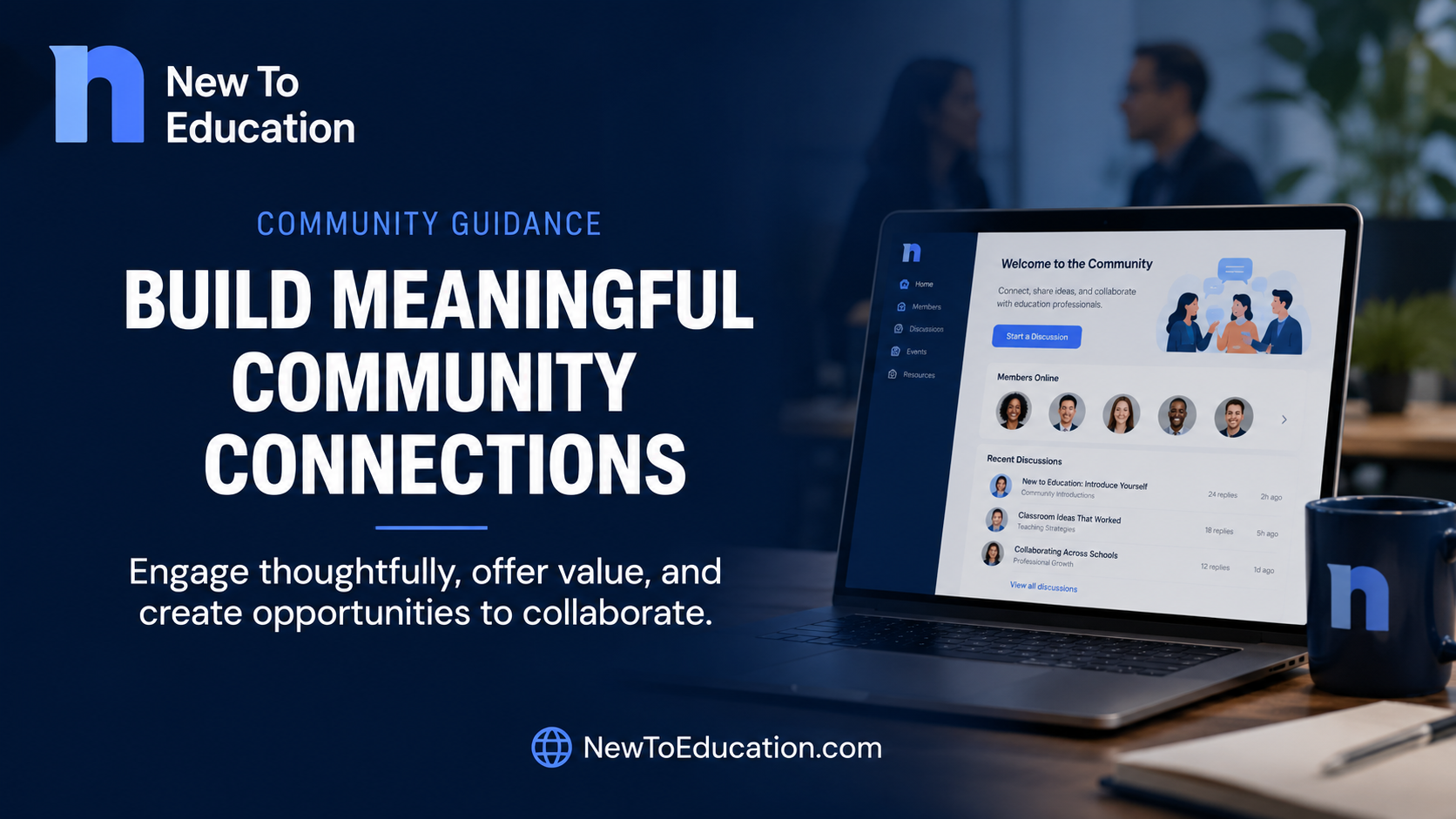
How to Build Meaningful Connections in Our Community

General
How to Build Meaningful Connections in Our Community
A complete profile helps people understand who you are. A valuable post gives them a reason to notice your work. Meaningful engagement is what turns those first impressions into real connections.

The New To Education community brings together educators, students, creators, businesses, professionals, and organizations. Members may have different goals, but everyone benefits when conversations are respectful, useful, and focused on more than simply gaining attention.

Respond With More Than a Like

Likes can show support, but thoughtful comments create conversations.

When responding to a post, consider adding:

A relevant experience
A practical recommendation
A respectful question
Constructive feedback
A useful resource
A different perspective explained professionally

Instead of writing only “Great post,” explain what you found useful or what the post made you consider.

Introduce Yourself Before Making a Request

Before asking someone to collaborate, hire you, review your work, or visit your website, take time to understand who they are and what they contribute.

A strong introduction may include:

Your name or organization
Your role in the community
Why their work caught your attention
The specific reason you would like to connect

Personalized communication is more meaningful than sending the same message to multiple members.

Look for Shared Goals

Connections are strongest when members have a genuine reason to work together.

An educator and creator may develop classroom resources. A student may seek guidance from a professional in a field they are exploring. A business may partner with an educator to better understand its audience. Two organizations may collaborate on an event, project, article, or learning opportunity.

Before contacting someone, consider what both sides could gain from the relationship.

Offer Value Before Asking for Something

Community relationships should not feel one-sided.

You can provide value by sharing knowledge, answering a question, offering thoughtful feedback, recommending a resource, introducing someone to an opportunity, or supporting another member’s work.

You do not need to provide free professional services. The goal is simply to show that you are interested in contributing, not only receiving.

Be Specific When Proposing a Collaboration

Avoid sending vague messages such as:

“Let’s collaborate.”

A stronger message would be:

“I enjoyed your post about preparing students for career transitions. I create career-development resources and would be interested in discussing a short guide or community discussion that combines our perspectives.”

Specific proposals make it easier for someone to understand the idea and decide whether it fits their goals.

Respect Professional Boundaries

Not every member will be available to respond, collaborate, mentor, hire, or provide individual assistance.

Do not repeatedly message someone who has not responded. Avoid requesting private information, pressuring members to purchase something, or moving conversations away from the platform before trust has been established.

A respectful connection allows both people to decide whether and how the conversation continues.

Support Students Responsibly

Students are welcome to seek educational and career guidance, but all members should maintain appropriate professional boundaries.

Do not request unnecessary personal information from students. Avoid promises involving guaranteed employment, admissions, grades, scholarships, or financial success. Any opportunities shared with students should be accurately represented and appropriate for the intended age group.

Engage With Businesses and Creators Thoughtfully

Businesses and creators can contribute valuable resources, services, projects, and opportunities.

Members may ask questions about their work, provide constructive feedback, or explore possible partnerships. However, engagement should remain relevant to the discussion and should not become repetitive advertising, unsolicited sales messaging, or misleading promotion.

Keep Disagreements Constructive

Members will not always agree, especially when discussing education policy, leadership, technology, business, or social issues.

Disagree with the idea rather than attacking the person. Explain your reasoning, avoid insults, and acknowledge uncertainty when appropriate.

A productive disagreement can strengthen a discussion when it remains respectful and evidence-based.

A Simple Connection Message

You can use this structure:

Introduction:
Briefly explain who you are.

Connection:
Mention the post, profile, project, or shared interest that caught your attention.

Purpose:
Clearly explain why you are reaching out.

Next step:
Suggest a simple conversation or action without applying pressure.

Example

“Hello, I am a university student interested in educational technology. I saw your post about digital learning tools and found your discussion of accessibility especially helpful. I would be interested in learning more about the skills employers seek in this field. Would you be open to sharing one recommendation?”

Before You Connect

Ask yourself:

Have I reviewed the person’s profile or work?
Is my message relevant and personalized?
Am I offering value or only requesting something?
Is my request clear and reasonable?
Am I respecting privacy and professional boundaries?
Would I feel comfortable receiving the same message?

The goal is not to collect the largest number of connections. It is to build relationships based on shared interests, useful conversations, trust, and mutual respect.

Community question: What type of educator, student, creator, business, or professional would you most like to connect with here?
1

Comments (1)

U
Uvaise Student
3 weeks ago
Hii

Stay in the loop

Get the latest articles, tutorials, and news
delivered straight to your inbox.

Weekly updates No spam, ever Unsubscribe anytime
Support Us
Help Us Grow

Love learning with us? Help us continue providing quality education and free content to learners worldwide.

$

You're subscribed!

Thank you for joining us. Watch your inbox for
fresh articles and updates.

NewToEd Assistant

Always here to help